The Musician’s Morning: Creating at Dawn

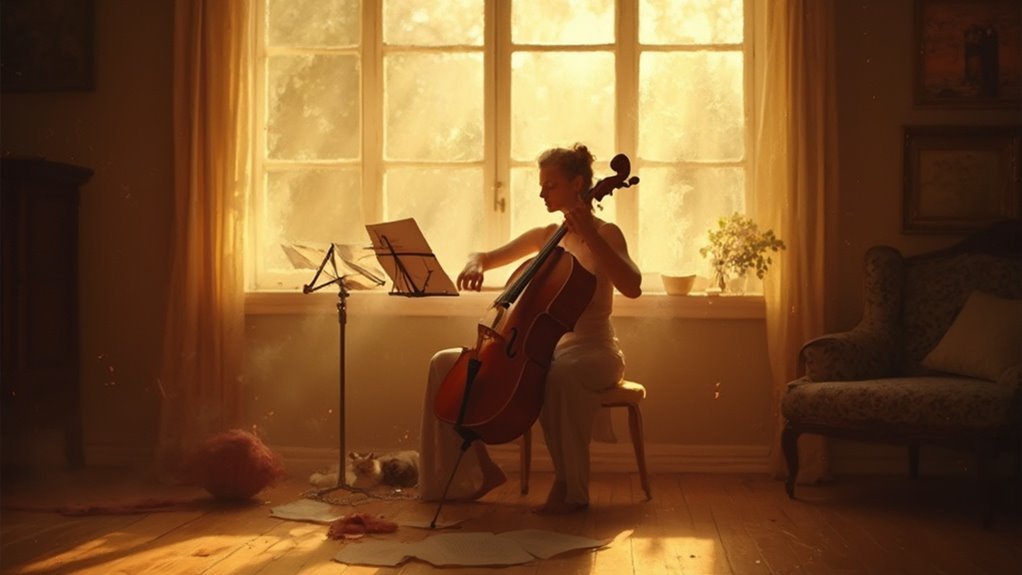
I've found that creating music at dawn offers unique advantages for your creative process. The early morning hours align perfectly with your body's natural rhythms, as cortisol levels peak and your mind processes information differently. Famous composers like Mozart and modern artists like Lady Gaga have tapped into this dawn potential, starting their creative work as early as 5 AM. By setting up a dedicated morning space and following a consistent ritual, you'll harness peak creativity with fewer distractions. When you explore the quiet power of dawn, you'll discover why so many musicians consider it their most productive time.
The Science Behind Dawn Creativity

A symphony of biological rhythms awakens in the early morning hours, priming our brains for creative work. I've discovered that our circadian rhythm benefits peak during these precious dawn moments, when our minds are fresh and unburdened by the day's mental clutter. The morning cortisol release, often called the awakening response, naturally energizes our cognitive functions and enhances our ability to forge new neural connections.
When I create music at dawn, I'm tapping into a state of heightened awareness that science has proven optimal for creative thinking. Our brains process information differently at this time – we're more likely to make unexpected connections and break free from conventional patterns. The pre-dawn hours offer lower external distractions, allowing our minds to access deeper levels of creative consciousness.
I've found that this biological advantage combines perfectly with the serene atmosphere of daybreak. Our prefrontal cortex, responsible for innovative thinking, operates at peak efficiency during these early hours. By aligning our creative practice with these natural rhythms, we're not just working – we're synchronizing with our body's innate creative potential.
Setting Up Your Morning Space
While creative inspiration flows naturally at dawn, the physical environment plays a crucial role in channeling that energy effectively. I've found that transforming your morning creative space requires careful attention to both functionality and atmosphere.
Start by selecting a dedicated area that's removed from household distractions, whether it's a spare room or a quiet corner of your bedroom.
I recommend experimenting with cozy lighting options to create the right ambiance. Install dimmable warm lights or use salt lamps that won't shock your system during these early hours. Position your instruments and equipment within easy reach, and ensure your recording setup is ready to capture those spontaneous moments of inspiration. Consider incorporating inspiring visual elements like artwork, mood boards, or nature views that spark your creativity without overwhelming the space.
Keep the area clutter-free but personalized. I suggest having a comfortable chair, a small table for your morning beverage, and proper acoustic treatment if possible. Remember to maintain good airflow and temperature control – your creativity flows better when you're physically comfortable. Store your essential tools nearby, from notebooks to cables, so you can focus purely on creation when inspiration strikes.
Effective Early Hour Practice Routines

Moving from a well-organized space to purposeful practice, early morning sessions demand a structured approach that maximizes your peak creative hours. I've found that breaking down morning routines into focused 25-minute segments allows you to maintain high concentration while preventing mental fatigue. Start with technical exercises for 25 minutes, followed by repertoire work, then composition or improvisation.
Consistent scheduling is crucial – I recommend choosing the same practice time each day to train your body and mind for optimal performance. Whether you're diving into scales at 5 AM or working on new material at 7 AM, stick to your chosen timeframe. I've discovered that incorporating short breaks between segments helps maintain engagement and prevents creative burnout.
Begin with easier material to warm up gradually, then progress to more challenging pieces as your mind sharpens. Track your progress using a practice journal or recording device, allowing you to assess improvements and adjust your approach. Remember to stay hydrated and maintain good posture throughout your session – these seemingly small details significantly impact your morning productivity and creative output.
Famous Musicians Who Rise Early
Ever wonder what connects legendary musicians like Mozart, Leonard Bernstein, and Paul McCartney? They're all renowned early risers who crafted some of their most innovative work at dawn. I've discovered that these musical giants tackled their early bird challenges head-on, transforming morning routine struggles into creative gold.
Mozart would rise at 6 AM sharp, composing until mid-morning with remarkable consistency. Bernstein started even earlier, often at 5 AM, claiming the quiet hours helped him explore complex harmonies without distraction. McCartney, despite his rock star lifestyle, has maintained an early schedule since his Beatles days, writing hits like "Yesterday" during dawn sessions.
You'll find similar patterns with contemporary artists too. Pharrell Williams starts creating at 5 AM, while Lady Gaga often begins vocal warm-ups at sunrise. These artists understand what I've learned through research: our brains are often most receptive to creative work in the early hours. Even when facing morning routine struggles, they've trained themselves to harness that pre-dawn creative energy, turning potential obstacles into opportunities for musical innovation.
Building Your Dawn Music Ritual

Taking inspiration from these musical legends, you can build your own productive morning ritual that sparks creativity. I recommend starting with a peaceful mindset focus by spending the first 10 minutes in complete silence, letting your mind settle into the day's creative possibilities.
Next, I suggest streamlining your morning routine efficiency by preparing your workspace the night before. Set out your instruments, equipment, or songwriting tools so you can begin creating immediately. I've found that even simple preparations, like having your coffee preset and your recording device charged, eliminate unnecessary distractions.
Create a dedicated morning music schedule that aligns with your peak energy levels. If you're sharpest at 6 AM, that's when you should tackle complex compositions or technical practice. I encourage you to protect this time fiercely – turn off notifications and establish boundaries with others.
Remember to stay flexible with your ritual. Some mornings might call for meditation before playing, while others might require diving straight into composition. The key is maintaining consistency while allowing your creative spirit to guide the process.


