Historic Coffee Houses That Changed the World

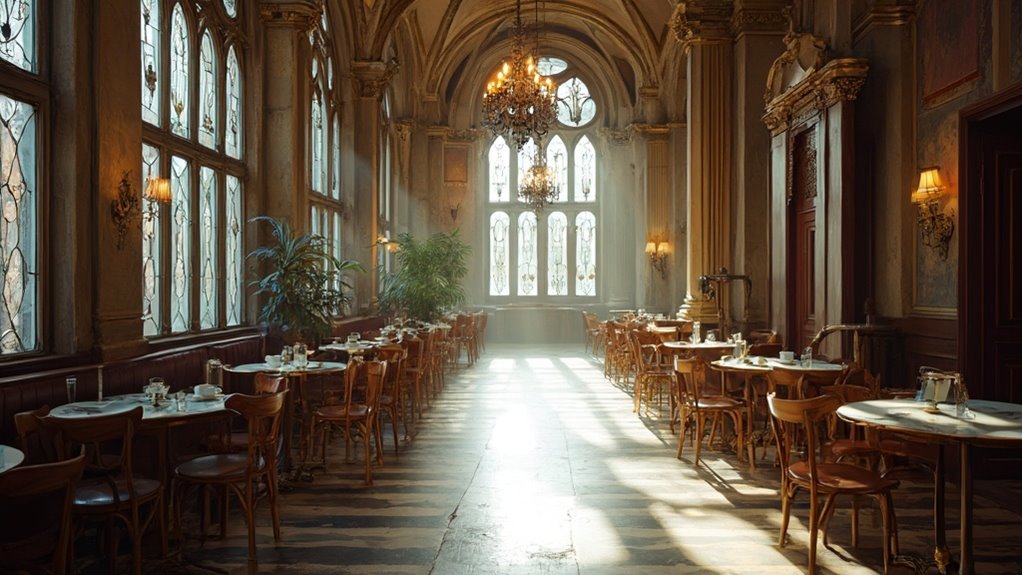
I can tell you that coffee houses have shaped our modern world in profound ways. From London's "Penny Universities" where anyone could join intellectual debates for just a penny, to Paris's Café Procope where revolutionaries plotted the overthrow of monarchies, these establishments sparked transformative ideas. Vienna's coffeehouses birthed psychoanalysis and artistic movements, while Lloyd's Coffee House evolved into the world's leading insurance market. In Boston, the Green Dragon Tavern hosted secret meetings that launched American independence. These historic spaces changed everything from politics to business, and their legacy still influences how we gather and innovate today.
London's Penny Universities
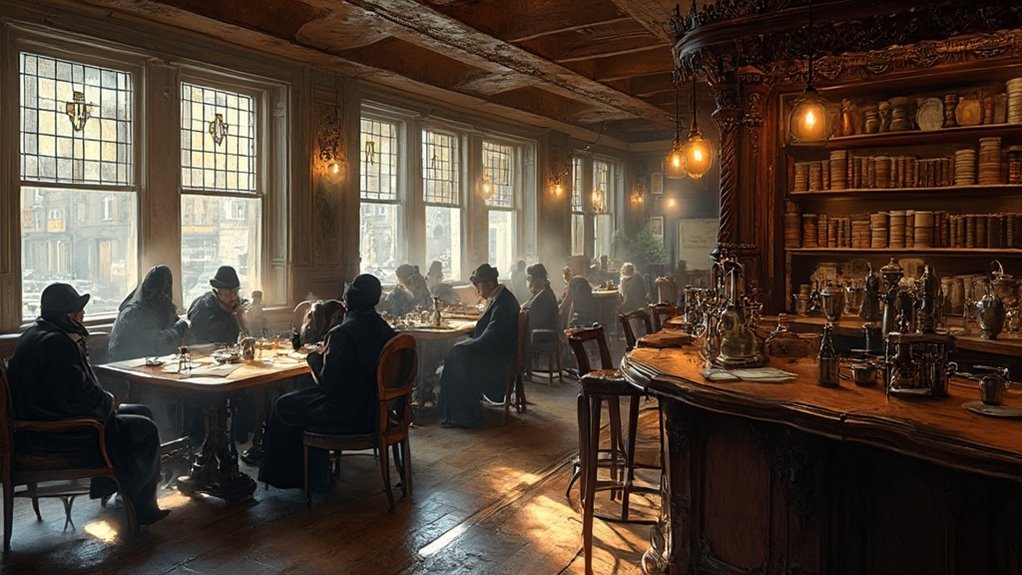
In the bustling streets of 17th century London, coffee houses earned the nickname "Penny Universities" because anyone could buy a cup of coffee for a penny and join intellectual discussions with scholars, merchants, and writers. These vibrant establishments served as the internet of their day, where I'd find people sharing news, debating ideas, and forming business partnerships over steaming cups of coffee.
Unlike the exclusive literary salons of Europe's elite, London's coffee houses welcomed anyone who could spare a penny. I find it remarkable that these spaces became crucibles of democracy, where social barriers dissolved in an atmosphere of caffeinated conversation.
Political discussions flourished as patrons debated the issues of the day, leading to significant social reforms and revolutionary ideas.
Many of London's most enduring institutions were born in these humble establishments. Lloyd's of London began as a coffee house where merchants gathered to insure ships, while the Royal Society's earliest meetings took place at Grecian Coffee House. When I look at today's coffee shop culture, I see the lasting influence of these democratic spaces where ideas changed the world one penny at a time.
Café Procope in Revolutionary Paris
While London's penny coffee houses sparked democratic discourse in Britain, Paris witnessed its own coffee house revolution at the iconic Café Procope. I find it fascinating that this legendary establishment, founded in 1686, became the epicenter of French intellectual life and revolutionary thought.
When I explore the history of Café Procope, I'm struck by how it attracted prominent French enlightenment figures like Voltaire, Rousseau, and Diderot. They'd gather around marble tables, sipping coffee from delicate porcelain cups while engaging in heated social and political discussions that would shape modern democracy. The café's walls absorbed debates about liberty, equality, and human rights – ideas that would later fuel the French Revolution.
What makes Café Procope extraordinary is its role as an incubator for revolutionary ideas. I can tell you that Benjamin Franklin drafted parts of the American Constitution here, while Robespierre and Marat plotted the overthrow of the French monarchy within these very walls. Even today, when you visit Café Procope in Paris's 6th arrondissement, you're walking through the same spaces where coffee and conversation sparked a revolution that changed the world.
Viennese Intellectual Coffeehouses
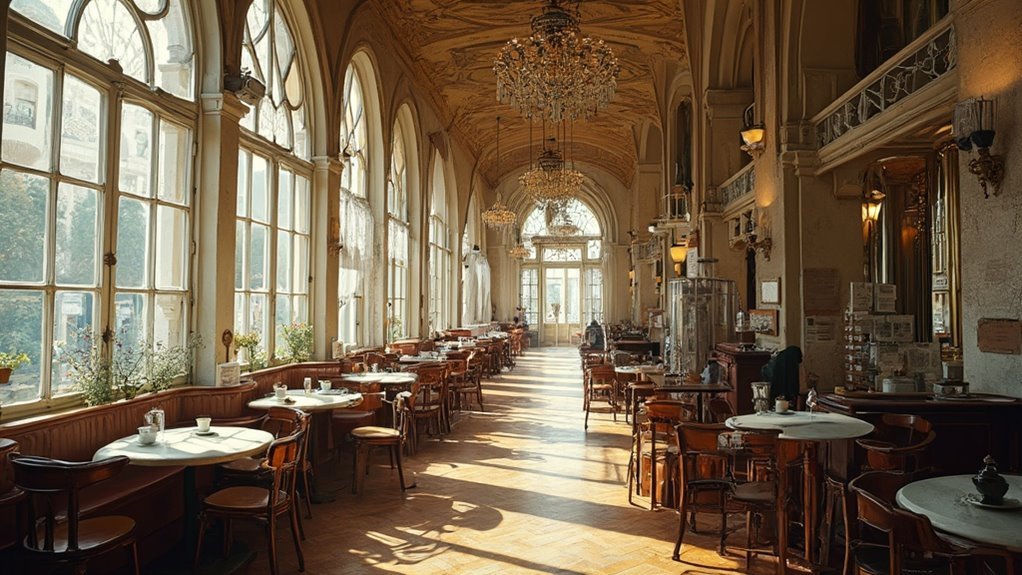
Steam rises from porcelain cups in Vienna's grand coffeehouses, where the Habsburg Empire's greatest minds gathered during the late 19th and early 20th centuries. I'm struck by how these elegant establishments transformed from simple coffee shops into intellectual powerhouses that shaped modern thought and culture.
Vienna's café culture birthed a unique phenomenon: coffeehouses became de facto literary salons where writers, artists, and thinkers could work for hours over a single cup of coffee. At Café Central, I can point to where Peter Altenberg practically lived, writing his observations of Viennese society. At Café Griensteidl, the Young Vienna literary movement flourished under the leadership of Karl Kraus.
What I find most revolutionary about these spaces is how they democratized intellectual discourse. Whether you were Sigmund Freud developing psychoanalysis at Café Landtmann or Gustav Klimt sketching at Café Museum, these venues provided a neutral ground where ideas could flow freely. They're more than historical landmarks – they pioneered a model of collaborative innovation that today's coworking spaces and innovation hubs still emulate.
Lloyd's Coffee House Maritime Legacy
Centuries before Vienna's intellectual cafes emerged, London's Lloyd's Coffee House charted a different course in coffee shop history. In 1688, Edward Lloyd transformed a simple coffee house into what I consider the birthplace of modern insurance and shipping intelligence.
Let me show you how this humble establishment, riding the wave of maritime trading networks that flourished during the Ottoman Empire expansion, became something extraordinary. Lloyd's Coffee House wasn't just about serving coffee – it was where ship captains, merchants, and insurers gathered to exchange crucial information about vessels, cargo, and maritime risks.
I find it fascinating that Lloyd's methodically collected and shared shipping news, creating the world's first maritime intelligence network. The coffee house published "Lloyd's List," which tracked ship movements and losses, becoming the industry standard. What started as informal conversations over coffee evolved into Lloyd's of London, the world's leading insurance market.
Today, when I look at the global shipping and insurance industries, I can trace their DNA back to those early days when Lloyd's Coffee House turned caffeine-fueled conversations into a revolutionary business model that still shapes international commerce.
Boston's Green Dragon Tavern
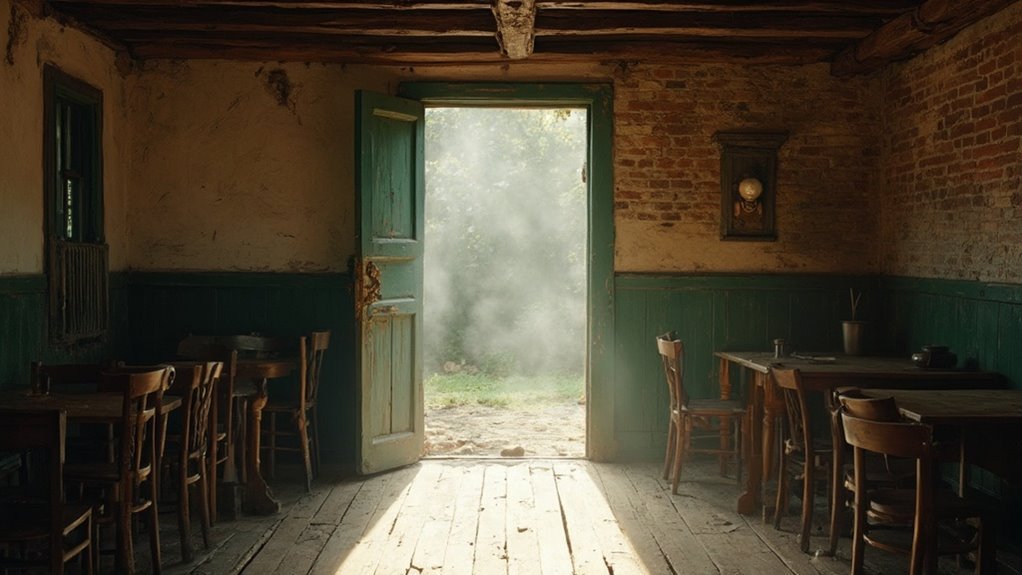
Known as the "Headquarters of the Revolution," Boston's Green Dragon Tavern served as more than just a colonial coffee house – it became the unofficial command center where American independence took root.
I find it fascinating that within these walls, political intrigue unfolded nightly as the founding fathers plotted their resistance against British rule. Paul Revere, John Adams, and other members of the Sons of Liberty would gather in secret meetings, planning everything from the Boston Tea Party to Revere's famous midnight ride. They'd sip coffee and ale while crafting the strategies that would reshape a nation.
What makes the Green Dragon particularly significant is how it transformed from a simple coffee house into a nexus of revolutionary activity. The British never suspected that this bustling establishment, with its mix of merchants, sailors, and local politicians, was actually a hotbed of rebellion. I'm struck by how the tavern's layout, with its private meeting rooms and hidden spaces, perfectly suited the revolutionaries' need for discretion. While the building itself no longer stands, its impact on American history remains immeasurable, having served as the birthplace of countless pivotal decisions that led to independence.
Ottoman Empire's First Coffeehouse
The Ottoman Empire's first coffeehouse, Kiva Han, opened its doors in Constantinople in 1475, establishing what would become a revolutionary social institution across the Islamic world. I can't overstate how this pioneering establishment transformed social interaction and sparked intellectual discourse throughout the empire.
As I examine the impact of Kiva Han, it's clear that the expansion of trade along the Silk Road played a crucial role in its success. Coffee beans from Yemen made their way to Constantinople, creating a new culture of coffee consumption that spread rapidly across Ottoman territories.
What fascinates me is how these coffeehouses became known as "Schools of the Wise," where people from different social classes could gather to discuss politics, literature, and philosophy.
The cultural influence of Kiva Han extended far beyond its walls. It inspired the creation of thousands of coffeehouses throughout the Ottoman Empire, serving as models for European establishments that would emerge in the following centuries. Today, when I walk into a modern café, I can trace its lineage back to those first revolutionary steps taken in Constantinople's bustling streets.


