Morning Fog: The Science of Nature’s Coffee Break

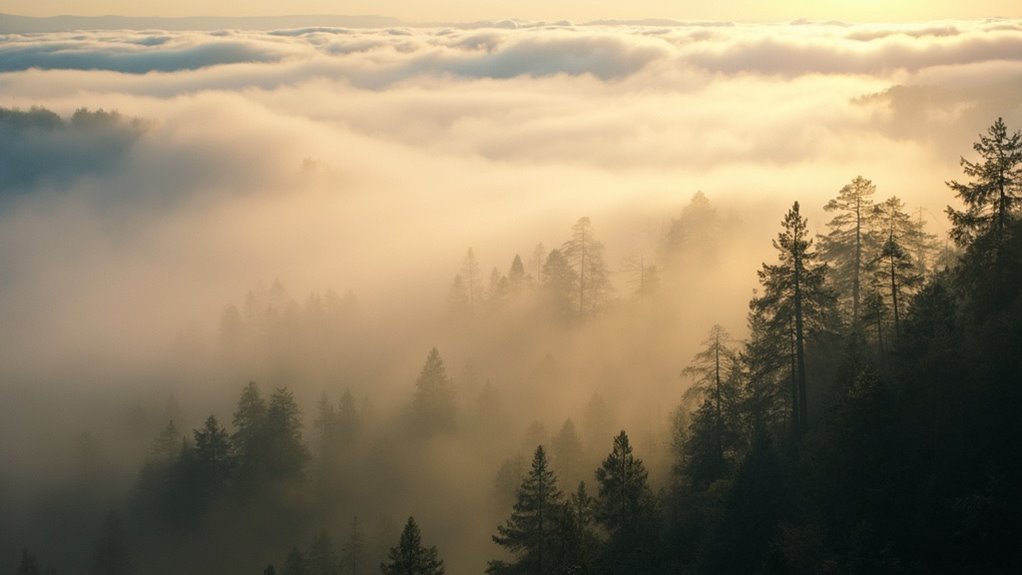
I'll explain what makes your misty mornings happen. Morning fog forms when warm air meets cooler surfaces in the pre-dawn hours, typically when the ground rapidly cools through radiation. As the air temperature drops to match the dew point, tiny water droplets create that ethereal blanket we see drifting across landscapes. While radiation fog is most common, you'll find different types near coasts, valleys, and lakes where geographical features trap cool air. These natural phenomena don't just create stunning views – they impact everything from your morning commute to local ecosystems. There's more to this mystical morning show than meets the eye.
What Creates Morning Fog
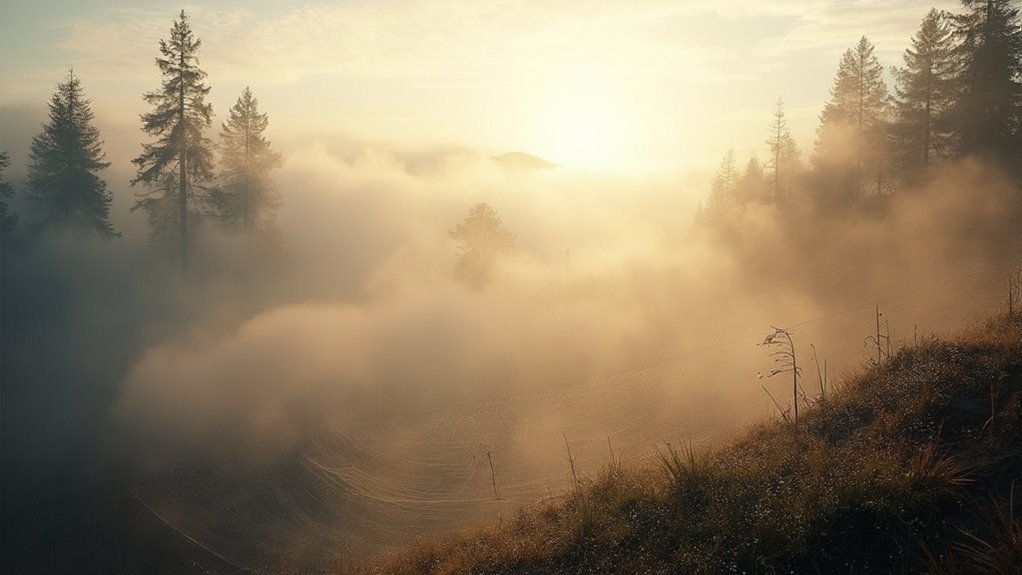
While many people witness morning fog on their daily commute, few understand the precise conditions that create this ethereal phenomenon. I've found that morning fog emerges when warm air meets cooler surfaces, typically during the predawn hours when ground temperatures drop significantly.
Let me explain the process: Throughout the day, the sun heats the Earth's surface and surrounding air. As night falls, the ground rapidly cools through radiation, leading to moisture absorption by the air closest to the surface. When the air temperature drops to match the dew point – the temperature at which water vapor condenses – tiny water droplets form, creating the fog we see.
Dew point fluctuations play a crucial role in this process. I've observed that areas with higher humidity levels are more prone to fog formation, as the air already contains substantial moisture. Geographical features like valleys, lakes, and coastal regions enhance this effect by trapping cool air and providing additional moisture sources. The process requires a delicate balance – too much wind disrupts formation, while too little prevents proper mixing of warm and cool air layers.
Types of Fog
Fog formations come in several distinct varieties, each with unique characteristics and formation patterns. I'll introduce you to the most fascinating types you might encounter in your daily life.
Radiation fog is what I consider the classic morning fog, forming when the ground cools rapidly overnight. It's most common in valleys and low-lying areas where moisture content remains high. Advection fog, meanwhile, occurs when warm, moist air moves over cooler surfaces – you'll often see this along coastlines where warm air meets cool water.
When you're driving in mountainous regions, you might encounter upslope fog, which forms as air is forced up hillsides and cools. Valley fog can persist for days, trapped by temperature inversions in deep valleys. I find steam fog particularly intriguing – it forms when cold air moves over warmer water, creating a steamy effect.
Precipitation fog develops when rain or snow falls through cool air, affecting precipitation rates and visibility. The rarest type I've studied is ice fog, occurring in arctic regions when water vapor transforms directly into ice crystals in extremely cold conditions.
The Role of Temperature
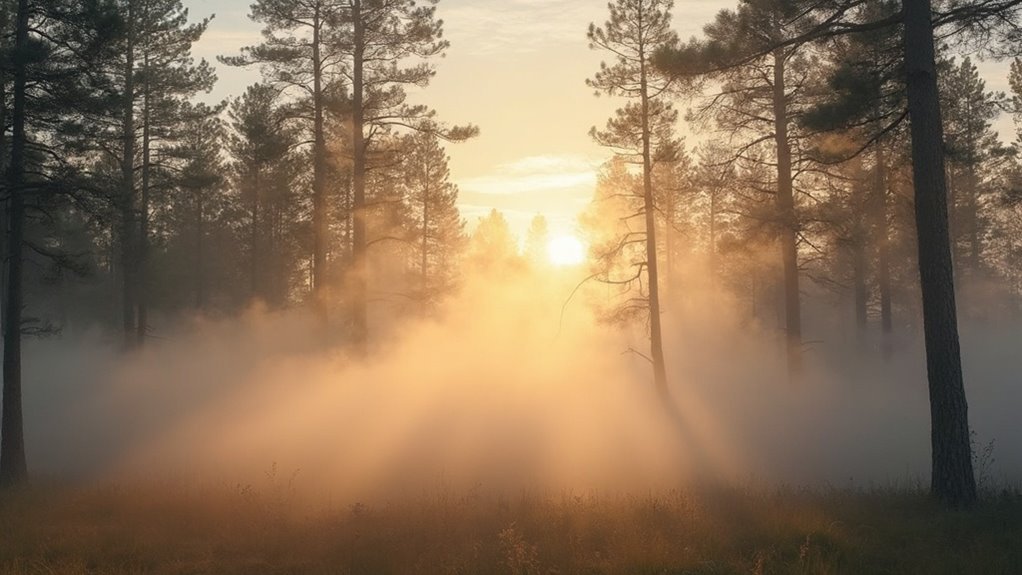
Temperature fluctuations play a starring role in fog formation, acting as nature's on-off switch for this meteorological phenomenon. I've observed that when warm air meets cold surfaces, or cold air settles over warm ground, we get the perfect recipe for fog development. These temperature variations create the conditions needed for water vapor to condense into those ethereal droplets we see hanging in the air.
What I find particularly fascinating are thermal inversions, where warmer air sits atop cooler air near the ground – the opposite of what we typically experience. This temperature flip-flop traps moisture close to the surface, often leading to persistent fog banks that can blanket entire valleys or coastlines. As the sun rises and heats the ground, I watch as these inversions break down, causing the fog to lift and dissipate.
Understanding these temperature dynamics helps me predict when fog will form, persist, or clear. It's like watching a thermostat control the visibility of our landscape, where even a few degrees' difference can transform a clear morning into a misty wonderland.
Weather Patterns and Fog Formation
Weather patterns create various conditions that influence fog formation throughout the year. I've observed that when high atmospheric pressure systems dominate an area, they often trap moisture close to the ground, creating ideal conditions for fog development. These systems typically bring stable conditions and clear skies, which allow heat to escape rapidly from the Earth's surface during evening hours.
I find it fascinating how cloud movement at different altitudes affects fog formation. When warm air masses collide with cool surfaces, or when moist air encounters cold air masses, fog becomes more likely. In coastal areas, I've noticed that sea breezes push moisture inland, where it can condense into fog when it meets cooler land temperatures.
You'll see the most common fog patterns during seasonal transitions, particularly in spring and fall. During these periods, temperature fluctuations between day and night are more pronounced, and varying wind patterns can either support or inhibit fog development. I've tracked how changing weather systems influence these patterns, noting that fog tends to form more frequently when wind speeds are low and moisture levels are high.
Fog's Impact on Daily Life
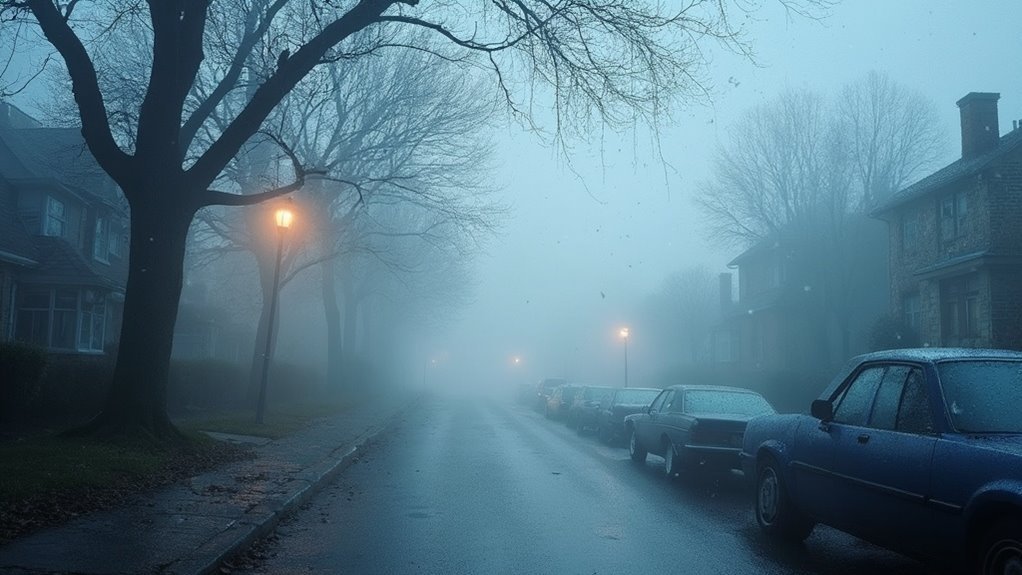
These atmospheric conditions we've discussed shape not only our environment but also our daily routines. I've observed how fog transforms our everyday experiences, from morning commutes to outdoor activities, creating a ripple effect across communities.
When fog rolls in, it immediately impacts our transportation systems. I've seen airports delay flights, ships reduce speeds in harbors, and drivers adjust their habits on foggy roads. While these adaptations can be inconvenient, they're crucial for safety. The reduced visibility affects everything from school schedules to delivery services.
Beyond practical concerns, fog influences our community activities and visual aesthetics. I've watched as photographers and artists venture out during foggy mornings to capture ethereal landscapes. Local events often adjust their timing to accommodate fog patterns, especially in coastal areas where it's more prevalent. Parks and outdoor venues might delay their openings, while some businesses adapt their operating hours to fog-heavy seasons.
In urban settings, I've noticed how fog can actually help reduce noise pollution and create natural sound barriers, temporarily transforming busy cityscapes into more serene environments.
Predicting Foggy Conditions
Anyone who lives in a fog-prone area knows the value of accurate fog forecasting. I've found that predicting fog requires understanding several key atmospheric conditions that work together like pieces of a puzzle. By monitoring dew point fluctuations and tracking atmospheric stability, I can often anticipate when fog will form with surprising accuracy.
I rely on advanced weather models that analyze temperature inversions, moisture content, and wind patterns. When warm air sits above cooler surface air, creating atmospheric stability, conditions become perfect for fog formation. I watch for evening temperatures approaching the dew point, as this convergence signals likely fog development by morning.
Local topography plays a crucial role in my predictions. Valleys, coastal areas, and regions near large water bodies have distinct fog patterns I've learned to interpret. I combine these geographical factors with real-time weather data from ground stations and satellites to create detailed fog forecasts. Modern technology has revolutionized my ability to track these conditions, letting me warn you about incoming fog events hours before they materialize, helping you plan your morning commute or outdoor activities more effectively.


