Spring Dawn: Season of Renewal

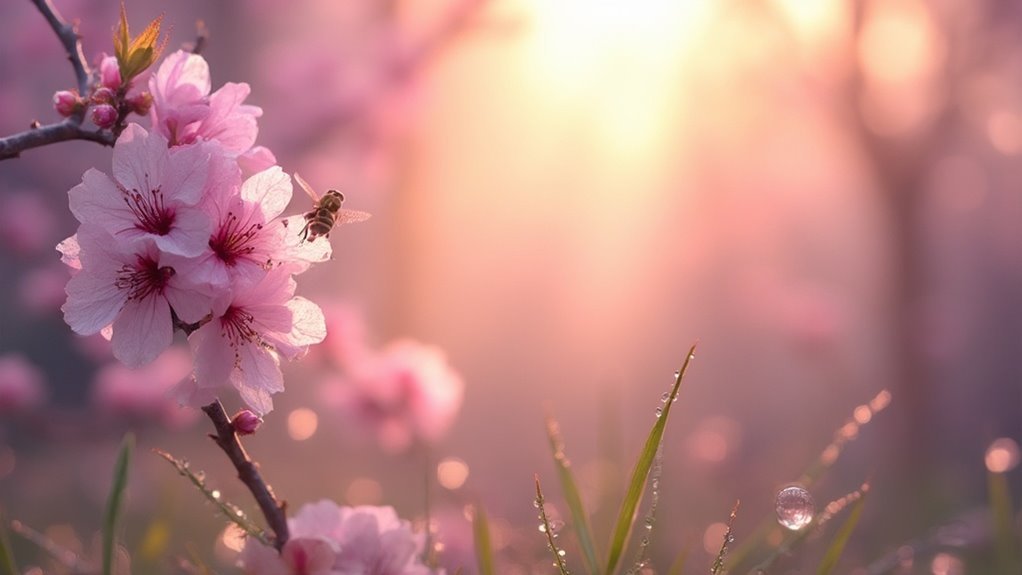
I'm always amazed by how spring dawn transforms our world into a masterpiece of renewal. As the first light breaks, I hear cardinals and chickadees piercing the morning mist with their melodic calls while early flowers like snowdrops and crocuses push through the thawing earth. It's a perfect time to start garden preparations, planting cool-weather crops as returning birds scout for nesting spots. The profound stillness of daybreak offers a peaceful moment to witness nature's reawakening – from the earthy scent of warming soil to the delicate frost patterns. Let's explore how this seasonal symphony unfolds each morning.
Nature's Morning Symphony
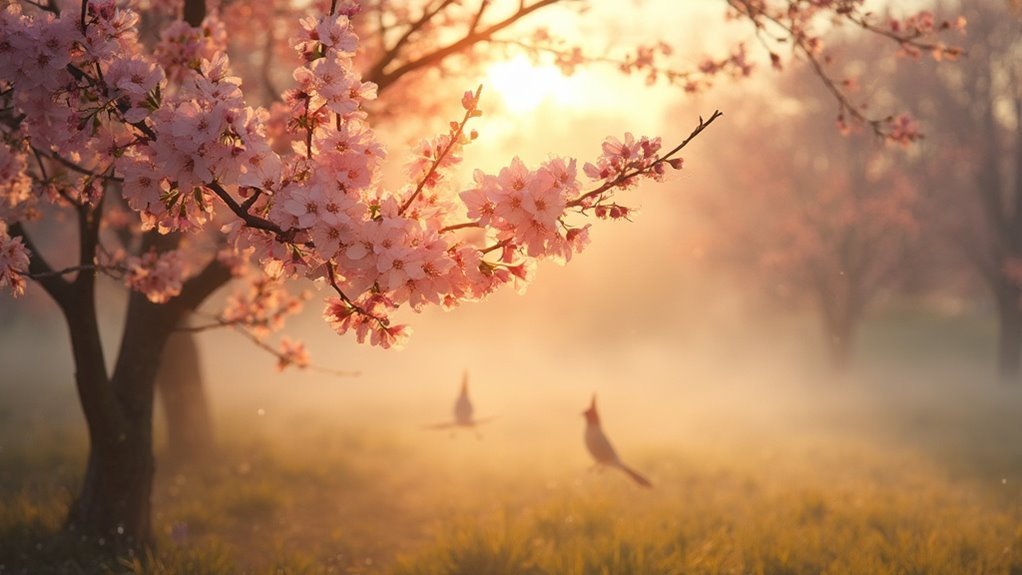
Songbirds pierce the misty dawn with their melodic calls, announcing spring's arrival. I watch as the first rays of sunlight filter through the branches, illuminating droplets of dew that cling to fresh buds.
The birds awakening creates a cascading effect – one species after another joins the morning performance, each adding its unique voice to nature's orchestra.
From my observation point, I'll guide you through this vibrant chorus that unfolds like a well-rehearsed symphony. Cardinals lead with their sharp, clear whistles while chickadees add their distinctive "dee-dee-dee." Robins contribute their cheerful warbles, and mourning doves punctuate with soft, rhythmic coos. The morning air vibrates with their combined energy.
You'll notice how this audio tapestry shifts and evolves as more performers join in. Woodpeckers provide percussion with their distant drumming, while wrens weave intricate melodies through the soundscape. This dawn chorus isn't just beautiful – it's a complex communication network, signaling territory, seeking mates, and celebrating the renewed energy of spring.
Early Spring Garden Rituals
A gardener's instincts awaken with the first warm days of March, pulling us outside to assess winter's aftermath. I've learned that these early moments are crucial for setting up a successful growing season, and I'm eager to share my refined approach to spring garden preparation with you.
I start by clearing debris and examining soil health while the ground is still partially frozen. This timing lets me walk on beds without compacting the earth, making it easier to remove dead plants and winter mulch. When prepping garden beds, I've found that incorporating fresh compost now, rather than later, gives beneficial microorganisms time to multiply before planting begins.
Next, I focus on planting seedlings indoors under grow lights, using a staggered schedule I've developed through years of experimentation. I'll tell you a secret: I start cool-weather crops like peas and spinach in biodegradable pots, so I can transplant them directly into the garden without disturbing their roots. This method gives me a three-week head start on the growing season, and I've found it consistently produces stronger plants than direct sowing.
Signs of Seasonal Change
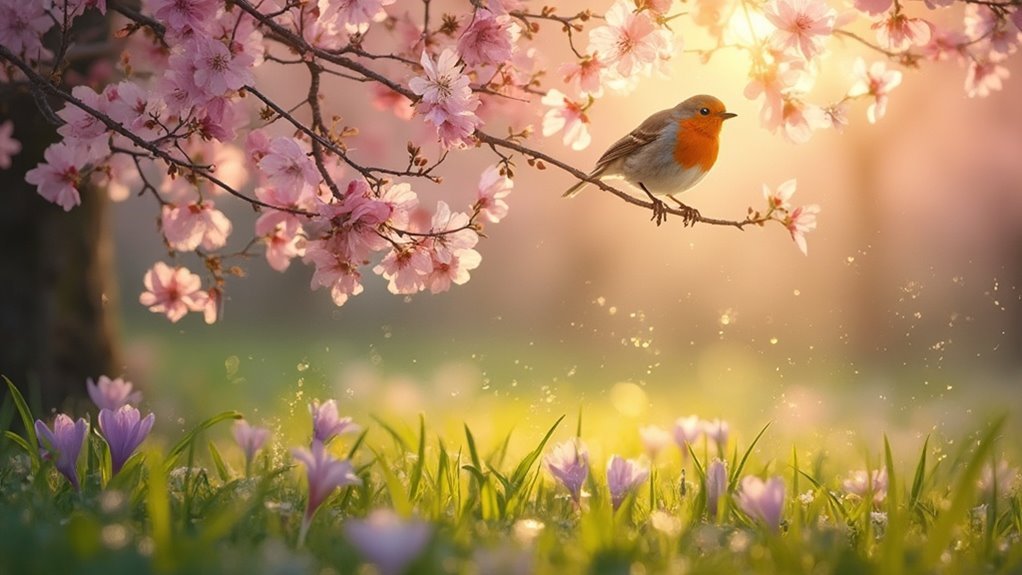
The rich symphony of early spring reveals itself through countless natural cues I've learned to recognize. I watch shifting weather patterns transform the landscape, as winter's steady chill gives way to fluctuating temperatures and mixed precipitation. One day might bring gentle rain, the next a surprising burst of warmth, creating the perfect conditions for nature's awakening.
I notice budding plant life emerging in precise sequence – first the hardy snowdrops and crocuses, followed by daffodils pushing through thawing soil. Tree branches, previously stark against winter skies, now display swelling buds that hint at the foliage to come. Even the quality of light changes, streaming through my windows at new angles and lingering longer into evening.
The air itself carries different messages now. I detect the earthy scent of soil warming in the sun, while morning frost patterns become increasingly delicate and short-lived. Birds return with their distinctive calls, joining year-round residents in an increasingly complex chorus. These subtle shifts signal nature's carefully choreographed transition, marking winter's retreat and spring's steady advance.
Wildlife Returns Home
With increasing frequency, I spot familiar faces returning to my backyard sanctuary as spring gains momentum. The emerging bird migration brings back my cherished companions – robins probing the softening soil, warblers darting through awakening branches, and red-winged blackbirds announcing their arrival with distinctive calls.
I've tracked these seasonal patterns for years, noting how wildlife's return synchronizes perfectly with budding plant life. As maple buds swell and daffodils pierce the earth, hibernating creatures stir from their winter retreats. Chipmunks scout fresh burrow locations while butterflies test their wings on sunny afternoons.
Even the tiny spring peepers emerge to join nature's reawakening chorus. What fascinates me most is how these returning residents immediately resume their roles in our local ecosystem. They're not just passive observers but active participants in spring's unfolding story. Each species arrives precisely when their preferred food sources and habitats reach optimal conditions. I'm continually amazed by this precision, this ancient choreography that transforms our landscape from winter's quiet to spring's vibrant community.
Finding Peace at Daybreak
During my predawn walks through misty spring mornings, I've discovered a profound stillness that eludes me at other hours. Before the world fully awakens, I find myself immersed in a sacred space where tranquil contemplation comes naturally, allowing my thoughts to settle like morning dew on fresh grass.
I've learned that these early moments offer more than just quiet – they provide a canvas for reimagining what's possible. As the first rays of sunlight pierce through tree branches, I experience rejuvenating solitude that energizes my creative spirit. The gentle awakening of birds, the subtle shift from darkness to light, and the crisp morning air create an environment where innovation feels boundless.
You'll find, as I have, that embracing these dawn hours transforms your perspective. When you witness the day's first light touching the earth, you're not just observing nature's rhythm – you're participating in it. This is where clarity emerges, where solutions to complex problems often surface unexpectedly, and where you can reset your internal compass before the day's demands begin to accelerate.


