Dawn Meditation: Starting With Stillness


I've found that dawn meditation offers a unique gateway to inner stillness, when the world is quiet and our minds are naturally receptive. By creating a sacred space and starting with simple breath awareness, you'll tap into the profound silence that dawn brings. I watch my breath for 5-10 minutes, letting thoughts pass like clouds while staying anchored in the present moment. While early rising can feel challenging at first, the peace and clarity I gain set a powerful tone for my entire day. There's something magical about meeting yourself in those first rays of sunlight that can transform your entire practice.
The Power of Early Morning

Silence blankets the world in those precious moments before sunrise. I've discovered that this sacred time holds transformative potential, when the noise of daily life hasn't yet invaded our consciousness. In these early hours, I can tap into a peaceful solitude that's impossible to find later in the day.
I've learned that dawn creates a unique opportunity for deep inner work. My mind is fresh, unburdened by the day's accumulated stress. The tranquil environment of early morning allows me to access clearer thoughts and sharper insights. While others sleep, I can harness this pristine mental state to set intentions, plan strategically, or simply exist in the quiet.
What makes dawn particularly powerful is its biological alignment with our circadian rhythms. I've found that my cortisol levels naturally peak in the morning, making me more alert and focused. By synchronizing my meditation practice with this natural boost, I'm able to establish a stronger mind-body connection. This early morning ritual has become my secret weapon for maintaining mental clarity and emotional balance throughout the day.
Creating Your Sacred Space
A corner of my bedroom transforms into a sanctuary each morning, where cushions and soft lamplight create an inviting meditation spot. I've learned that establishing a dedicated space for meditation isn't about perfection – it's about creating an environment that speaks to your inner calm.
I recommend starting with a peaceful altar arrangement that reflects your personal journey. Maybe it's a simple wooden platform holding a crystal, a meaningful photo, or a small plant. Add calming ambiance elements like a Himalayan salt lamp or essential oil diffuser to engage your senses and signal to your brain that it's time to turn inward.
What matters most is that your space feels authentic to you. I keep my meditation corner minimal, with just a few carefully chosen items that help me disconnect from the outside world. A small singing bowl, a comfortable meditation cushion, and a soft blanket are often all you need. Remember, this space will evolve with your practice – let it be fluid and responsive to your changing needs as you deepen your meditation journey.
Essential Dawn Meditation Techniques

Once you've settled into your sacred space, the dawn hours offer unique stillness for meditation practice. I recommend starting with breath awareness – simply observing your natural breathing pattern for 5-10 minutes. Don't try to change anything; just notice the rhythm of your inhales and exhales.
Next, I'll guide you through a powerful technique that combines guided visualization with your established breath awareness. As you breathe in, imagine drawing in golden morning light through your crown, filling your entire body. With each exhale, visualize releasing any tension or heaviness into the earth below.
For deeper practice, I suggest using the dawn's natural progression. As the sun rises, gradually shift your attention from your internal experience to the awakening world around you. Notice the changing light, morning sounds, and subtle shifts in temperature. This connects your meditation to nature's rhythm and helps anchor your awareness in the present moment. When distracting thoughts arise, I encourage you to acknowledge them without judgment and gently return to your breath or visualization focus.
Common Challenges and Solutions
Many practitioners face recurring obstacles when establishing a dawn meditation practice. I've found that overcoming distractions like morning grogginess, ambient noise, or racing thoughts requires specific strategies. Try setting your meditation space the night before, using white noise to mask disruptive sounds, or keeping a notepad nearby to quickly jot down urgent thoughts before returning to your practice.
Managing expectations is equally crucial. I often remind myself that feeling resistance is normal – some mornings will flow better than others. Instead of aiming for perfect stillness, focus on gentle awareness. If you miss a session, don't let guilt derail your progress. Simply resume the next day.
I've discovered that the most successful dawn meditators develop personalized solutions. If you're struggling with early rising, gradually adjust your bedtime in 15-minute increments. When mind-wandering persists, experiment with different anchoring techniques like breath counting or body scanning. Remember, challenges aren't failures – they're opportunities to refine your approach and deepen your practice.
Building a Lasting Practice
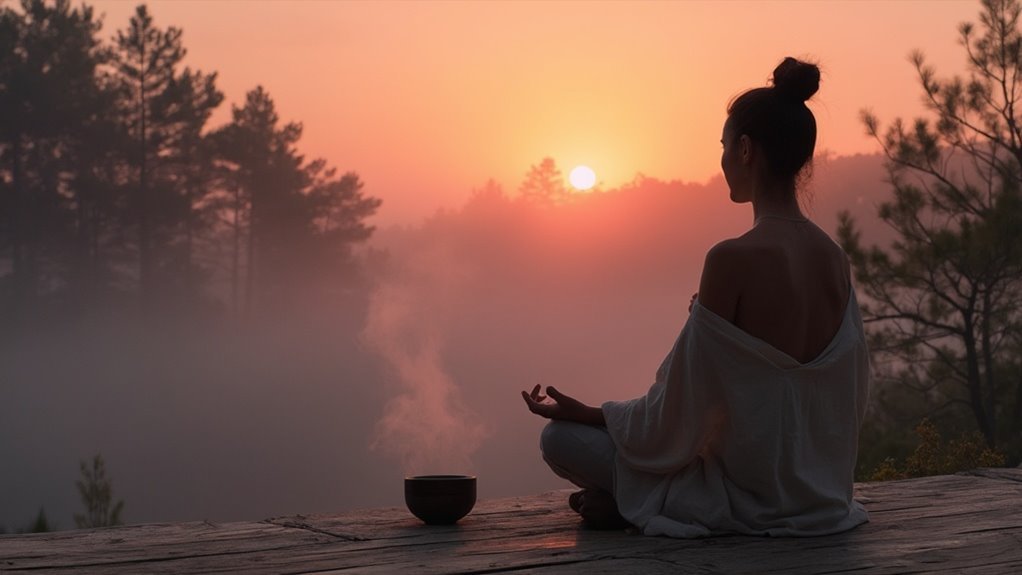
Through consistent daily practice, I've learned that building an enduring dawn meditation routine requires three key elements: accountability, adaptability, and self-compassion.
I recommend cultivating consistency by tracking your practice in a meditation journal or app. When you record your sessions, you'll notice patterns and maintain motivation as you witness your progress. I've found that sharing my journey with a meditation buddy or online community adds an extra layer of accountability while creating meaningful connections.
Adaptability means adjusting your practice when life throws curveballs. If you can't meditate at dawn one day, choose another quiet moment. I've learned to create backup time slots and alternative locations, ensuring I never miss a session due to unexpected circumstances.
Self-compassion is crucial when you face setbacks. Instead of harsh self-judgment on days when your mind wanders or when you oversleep, treat yourself with understanding. I've discovered that celebrating small wins and acknowledging growth, rather than seeking perfection, leads to a sustainable practice that evolves naturally over time.


