Breakfast Through the Decades

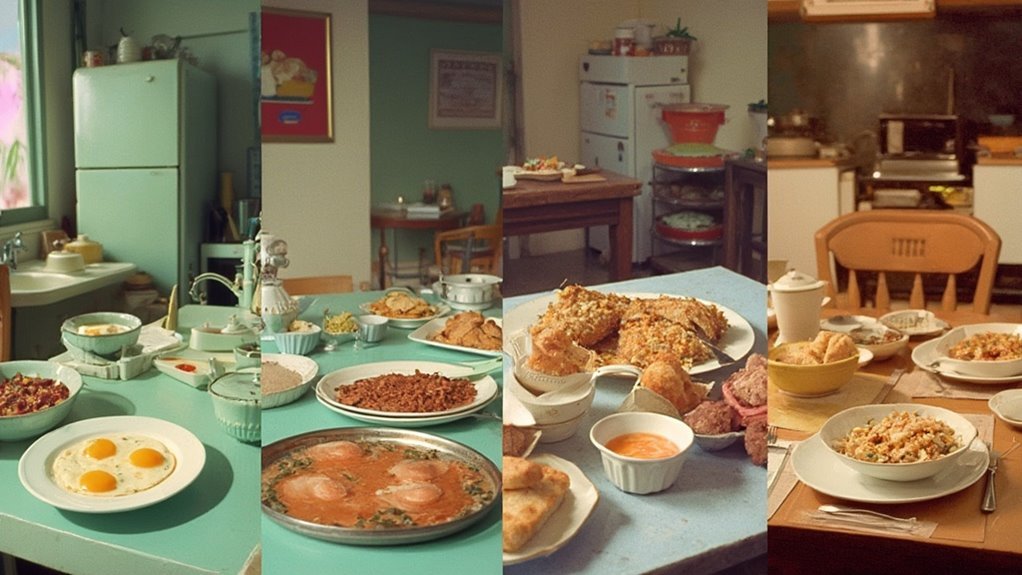
I'll take you on a journey through America's breakfast revolution, from the 1920s farm-fresh spreads of eggs and home-cured bacon to today's diverse morning options. After World War II, we saw convenience foods transform our breakfast tables with packaged cereals and frozen waffles taking center stage. The 1970s brought fast-food breakfast culture, with McDonald's Egg McMuffin leading the charge. Now, we're witnessing a fascinating blend of traditional cooking methods and modern nutrition knowledge, as many return to basics while embracing new food trends. There's quite a story behind how your morning meal got to where it is today.
Farm Breakfast Era (1920-1940)
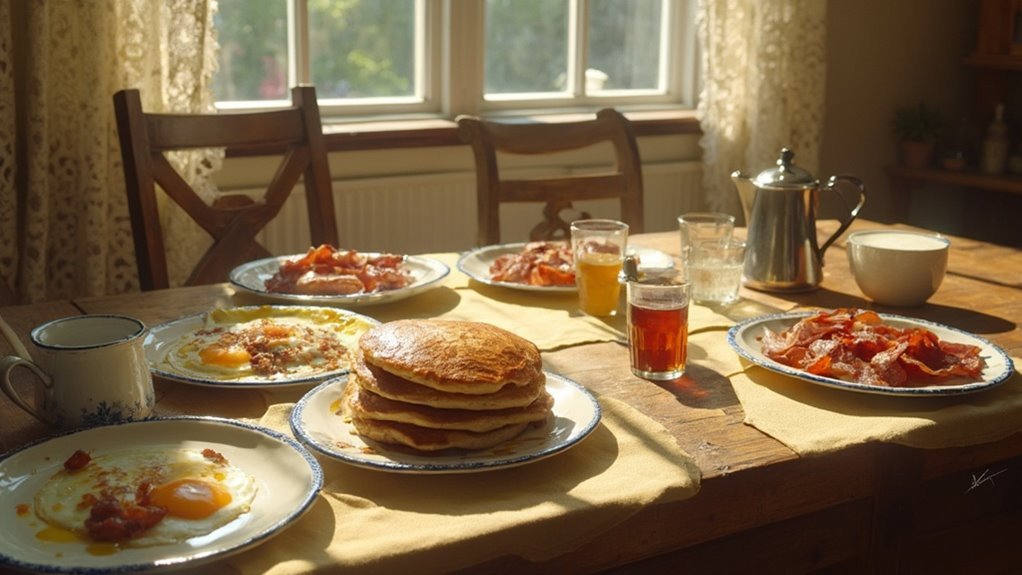
The Farm Breakfast Era marked a time when America's morning meals reflected the nation's agricultural roots. I've discovered that during this period, families relied heavily on farmer's market offerings and homegrown ingredients to create hearty, sustaining breakfasts. Fresh eggs from backyard chickens, hand-churned butter, and home-cured bacon were morning staples.
What fascinates me about this era is how it balanced simplified meal prep with nutritional value. Despite lacking modern conveniences, families developed efficient routines. They'd wake before dawn, stoke the wood stove, and prepare filling meals that sustained them through long days of physical labor.
Hot cereals like oatmeal and cream of wheat became popular because they were easy to make in large quantities.
I've found that many breakfast traditions we cherish today originated during this period. Home-baked bread transformed into toast, farm-fresh milk accompanied every meal, and seasonal fruits preserved from summer harvests brightened winter mornings. The era's emphasis on whole, unprocessed foods and direct-from-farm ingredients has inspired today's farm-to-table movement and continues to influence how we think about breakfast.
Rise of Convenience Foods
While farm-fresh simplicity defined early morning meals, post-World War II America embraced a dramatically different breakfast landscape. I've observed how this era marked a seismic shift in how we approached our first meal of the day. As families moved to suburbs and both parents entered the workforce, time became the new currency.
Packaged breakfast options revolutionized morning routines. Instead of cooking from scratch, families could now pour cereal from a box, pop frozen waffles in the toaster, or heat instant oatmeal. The innovation didn't stop there – manufacturers introduced single-serve portions, grab-and-go items, and complete breakfast kits that promised nutrition and convenience in one package.
Today, I'm seeing this convenience trend evolve even further with breakfast delivery services that bring ready-to-eat or easy-to-prepare morning meals right to your door. It's fascinating to watch how we've moved from time-intensive farm breakfasts to a world where a complete morning meal can arrive with just a few taps on our phones. The modern breakfast landscape continues to prioritize efficiency without completely sacrificing nutrition.
The Cold Cereal Revolution
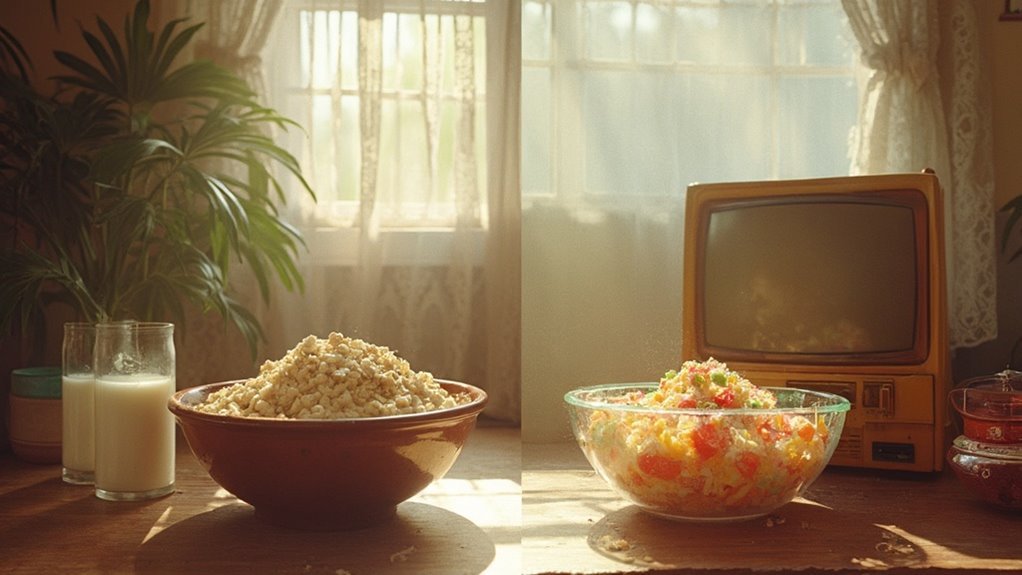
Ready-to-eat cold cereal sparked one of the biggest transformations in American breakfast history. I've watched as this revolutionary breakfast option has evolved from simple grains to an entire aisle of colorful boxes competing for attention. What began with Kellogg's Corn Flakes has exploded into hundreds of varieties catering to changing consumer tastes.
I can tell you that increased brand marketing played a crucial role in cereal's dominance. Companies invested heavily in cartoon mascots, prize giveaways, and television commercials that made breakfast exciting for kids and convenient for parents. From Tony the Tiger to Cap'n Crunch, these characters became household names, driving cereal sales to unprecedented heights.
The innovation didn't stop at marketing. I've seen manufacturers develop new techniques for making cereals crunchier, adding vitamins, and creating shapes that were both fun and functional. They've responded to health trends with whole grain options, reduced sugar varieties, and protein-enriched formulas. Today's cold cereals aren't just breakfast – they've become snacks, recipe ingredients, and even desserts, proving their remarkable adaptability to modern eating habits.
Fast Food Takes Over
Beyond cereal's reign in American homes, breakfast underwent another major shift as fast-food chains swooped in during the 1970s. I've watched as drive-through dining revolutionized how we consume our morning meals, transforming breakfast from a sit-down affair into a grab-and-go experience. McDonald's led this transformation with their Egg McMuffin in 1972, and countless chains followed suit.
The convenience of preset packaged meals changed everything about breakfast culture. Instead of cooking at home, you could now grab a complete breakfast sandwich, hash browns, and coffee all in one stop. I've seen how this shift reshaped our expectations of breakfast, making speed and convenience the new priorities. The quality mightn't match home cooking, but the time saved made it an irresistible option for busy professionals and families.
This revolution continues today, as fast-food chains compete to innovate their breakfast menus. They're constantly launching new items, extending breakfast hours, and improving ordering technology. What started as a simple breakfast sandwich has evolved into a multi-billion dollar industry that's forever changed how we start our day.
Back to Breakfast Basics
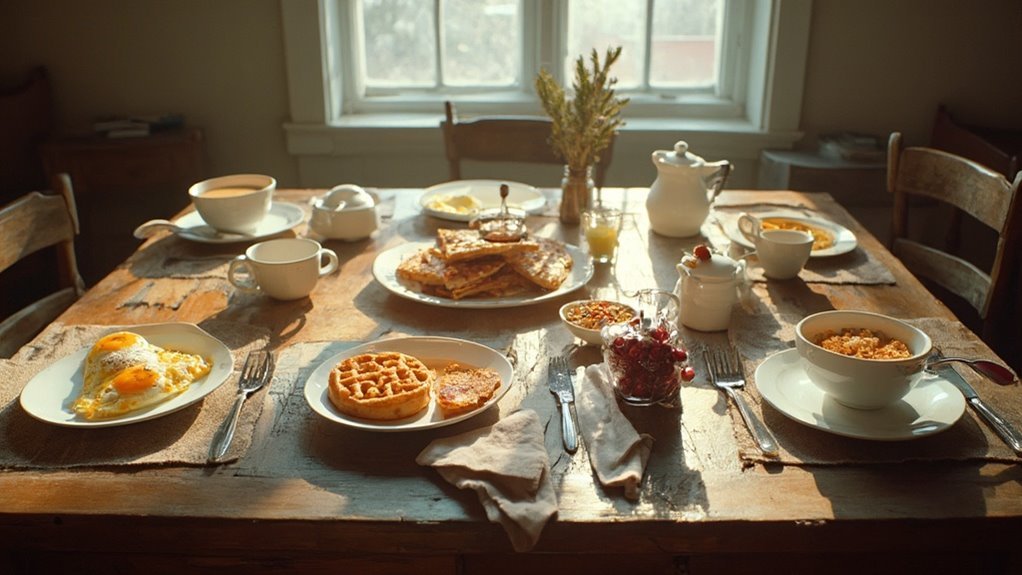
A surprising trend has emerged in recent years as many Americans return to traditional, home-cooked breakfast meals. I've noticed that people are increasingly rejecting pre-packaged convenience foods in favor of simple recipes that their grandparents might've enjoyed. Steel-cut oats, farm-fresh eggs, and whole-grain toast are making a comeback as staples of the morning meal.
What I find most interesting about this shift is how it combines old-school cooking methods with modern nutritional knowledge. Today's home cooks aren't just recreating vintage breakfast dishes – they're upgrading them with balanced nutrition in mind. I'm seeing quinoa porridge replace sugary cereals, and avocado toast become the new breakfast sandwich.
Digital platforms have made it easier than ever to find and share simple recipes that honor breakfast traditions while incorporating contemporary ingredients. You'll find that many of these modern interpretations focus on protein-rich combinations, whole grains, and fresh produce. This return to basics isn't just about nostalgia – it's about reclaiming control over what we eat and starting our days with intentional, nourishing meals.
Modern Morning Meal Trends
While traditional breakfast habits are making a comeback, modern morning meals have taken on distinct characteristics of their own. I've noticed that today's breakfast trends reflect our growing awareness of health, sustainability, and personalization. You'll find that morning menus now prominently feature plant-based options like chickpea scrambles, quinoa bowls, and oat milk lattes.
I'm seeing a significant shift toward local sourcing, with restaurants and home cooks alike prioritizing ingredients from nearby farms and producers. This focus on locality isn't just about freshness – it's about supporting community agriculture and reducing environmental impact. You'll notice that modern breakfast spots often highlight their partnerships with local egg farmers, coffee roasters, and produce suppliers.
What's particularly interesting is how technology has influenced our morning routines. I can tell you that meal planning apps, subscription breakfast boxes, and smart kitchen appliances are transforming how we prepare and consume our first meal of the day. Whether you're tracking your nutrients, ordering ahead through mobile apps, or following social media food trends, breakfast has become more connected and customizable than ever before.


