The Evolution of the Alarm Clock: A Wake-Up Call

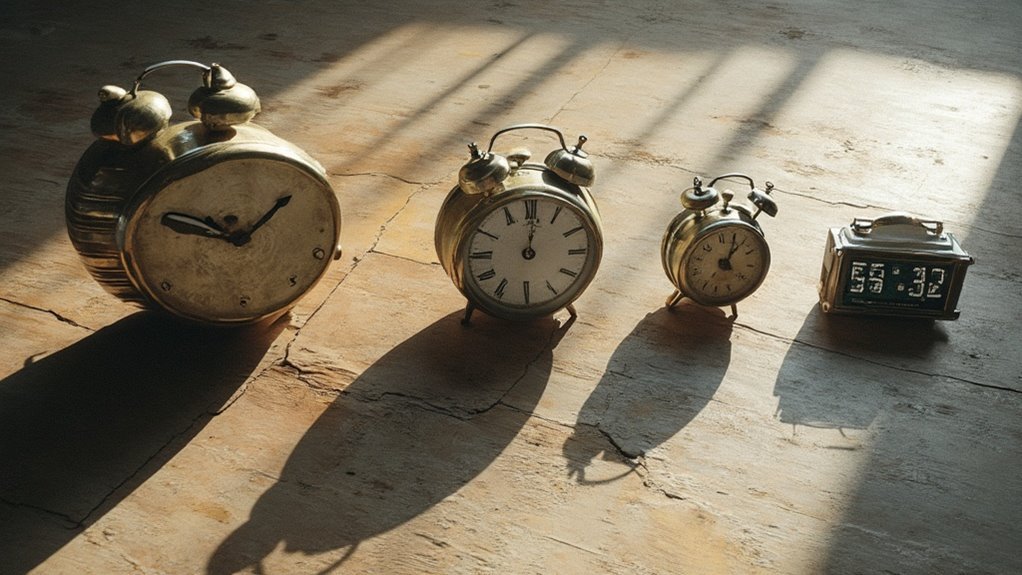
I find it fascinating how our wake-up tools have evolved from nature's rhythms to today's smart alarms. Ancient civilizations relied on sundials and water clocks, while the first mechanical alarms emerged in Greece and China. The Industrial Revolution brought mass-produced alarm clocks to everyday people, revolutionizing how we structured our daily lives. Electric models in the 1930s gave way to digital displays in the 1970s, introducing features like snooze buttons and programmable settings. Now, our smartphone alarms sync with our sleep patterns and smart home systems. The journey from sundial to smart device reveals humanity's relentless drive to master time.
Ancient Time-Telling Methods

The oldest methods of telling time relied on nature's rhythms. I've found that our ancestors were incredibly resourceful, using everything from the sun's position to the flow of water to track their days.
When I examine sundial evolution, I'm amazed at how these simple shadow-casting devices became increasingly sophisticated, progressing from basic stick-in-the-ground designs to elaborate mathematical instruments.
I'm particularly fascinated by water clock innovations, which marked a significant leap forward in time-telling technology. These clepsydras, as they were called, used the steady drip of water to measure hours with remarkable accuracy. I've studied how ancient civilizations, from Egypt to Greece, refined these devices by adding graduated markings and multiple chambers to improve precision.
What strikes me most is how these early timekeeping methods laid the groundwork for mechanical clocks. When I look at ancient Egyptian shadow clocks or Babylonian water clocks, I can see the seeds of modern alarm technology. They weren't just measuring time; they were beginning to control it, setting the stage for today's sophisticated wake-up devices.
The First Mechanical Alarms
Mechanical alarm clocks first emerged in ancient Greece and China, where clever inventors developed systems of gears and weights to create reliable wake-up mechanisms. I find it fascinating that these early devices used water clocks combined with intricate gear systems to mark time and trigger alarms at preset hours.
As I explore the history of these inventions, I'm particularly drawn to the European developments of the 1300s, when weight-driven mechanisms became more sophisticated. These designs used falling weights connected to gear trains that would release a striking mechanism at the desired time.
By the 1600s, pendulum-driven mechanisms revolutionized timekeeping accuracy, leading to more precise alarm functions.
I want to highlight that one of the most significant breakthroughs came from Levi Hutchins in 1787, who created what I consider the predecessor to our modern alarm clock. His design incorporated a mechanical gear system that could trigger a bell at exactly 4 AM. Though inflexible by today's standards, it marked a crucial step forward in alarm clock technology, paving the way for the adjustable timing mechanisms we now take for granted.
Industrial Age Timekeeping Revolution
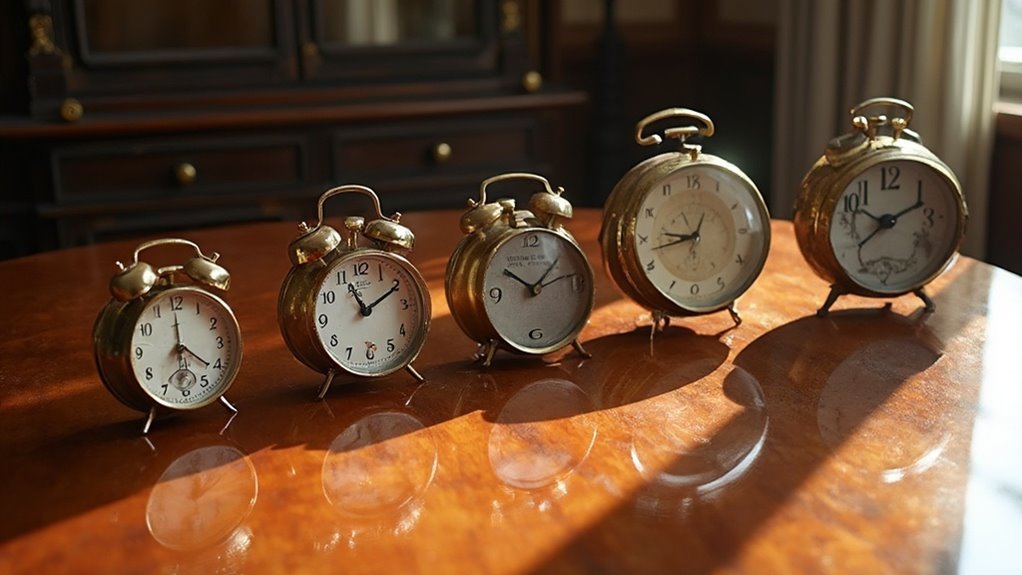
Building upon Hutchins' innovation, mass production techniques of the Industrial Revolution transformed alarm clock manufacturing in the 1850s. I've discovered that this period marked a dramatic shift from pre-industrial timekeeping devices, which were handcrafted and expensive, to affordable mechanical clocks that average workers could actually own.
Let me explain how mechanical clock advancements during this era changed everything. Factories began using interchangeable parts and assembly lines to produce alarm clocks at unprecedented speeds. I can tell you that this industrialization brought standardized timekeeping to the masses, with companies like Seth Thomas and Ansonia leading the charge. The precision engineering of these clocks meant that workers could reliably wake up for their factory shifts.
What I find fascinating is how these mass-produced alarm clocks helped synchronize industrial society. Workers no longer relied on church bells or factory whistles to manage their time. Instead, they could now independently track their schedules, which I believe was crucial for the growing industrial workforce. This democratization of timekeeping fundamentally changed how people structured their daily lives.
Electric Alarm Clock Era
Innovation surged forward in the 1930s as electric alarm clocks began replacing their mechanical predecessors. I've found that this shift marked a pivotal moment in timekeeping history, as manufacturers introduced reliable electric models that plugged directly into wall outlets. These clocks eliminated the need for daily winding and maintained precise time through synchronized motors.
The 1950s and 1960s brought even more exciting developments. Battery powered models emerged, freeing alarm clocks from their tethered positions near electrical outlets. This portability revolutionized how we approached personal timekeeping, allowing us to place our alarms wherever we needed them most.
The analog to digital transition of the 1970s transformed the landscape once again. I watched as LED displays replaced traditional clock faces, offering clear timekeeping in dimly lit rooms and introducing features like snooze buttons and multiple alarm settings. These innovations paved the way for the programmable functions we take for granted today, setting the stage for our modern smart devices and forever changing how we wake up each morning.
Digital Dawn

The 1980s ushered in a new era of digital alarm clocks that pushed conventional timekeeping into uncharted territory. I've watched as LED displays replaced mechanical hands, offering precise timekeeping and programming flexibility that was previously impossible. The distinctive red digits became a hallmark of bedside tables worldwide, fundamentally changing how we interact with time.
What I find fascinating is how digital technology transformed the wake-up experience. Gone were the days of simple bell rings – customizable alarm tones emerged, letting you choose from multiple sounds to start your day. The introduction of multiple alarm settings meant you could program different wake-up times for weekdays and weekends, a feature I consider revolutionary for its time.
Today, I'm seeing digital alarm clocks evolve even further through mobile device integration. Your bedside clock can now sync with your smartphone, adjust automatically for daylight savings, and even track your sleep patterns. The technology that began with basic digital displays has expanded into smart homes, where your wake-up routine can trigger a sequence of automated events, from brewing coffee to adjusting room temperature.
Smart Technology Transforms Wake-Up Calls
As digital alarm clocks laid the groundwork for smarter wake-up solutions, modern technology has revolutionized how we start our days. I've watched smart alarm clocks evolve into sophisticated devices that understand our sleep patterns and adapt to our needs. Today's wake-up technology integrates seamlessly with our smartphones, smart home systems, and AI assistants.
Voice activated alarms have transformed how we interact with our wake-up calls. I can now simply tell my device when to wake me up, adjust the alarm time, or even ask about my sleep quality. The integration of sleep tracking features means I'm no longer just being jolted awake at a preset time. These smart devices monitor my sleep cycles and wake me during my lightest sleep phase, making mornings less jarring.
What I find most impressive is how these devices learn from our habits. They'll suggest optimal bedtimes, adjust to my weekly schedule, and even sync with my calendar to ensure I'm up early for important meetings. They'll dim my smart lights gradually, play nature sounds, or even start my coffee maker – creating a personalized morning experience that makes waking up feel more natural.

