Dawn Bird Watching in the City: Urban Wildlife StoriesThe Death of the Morning Newspaper (And Why It Matters)

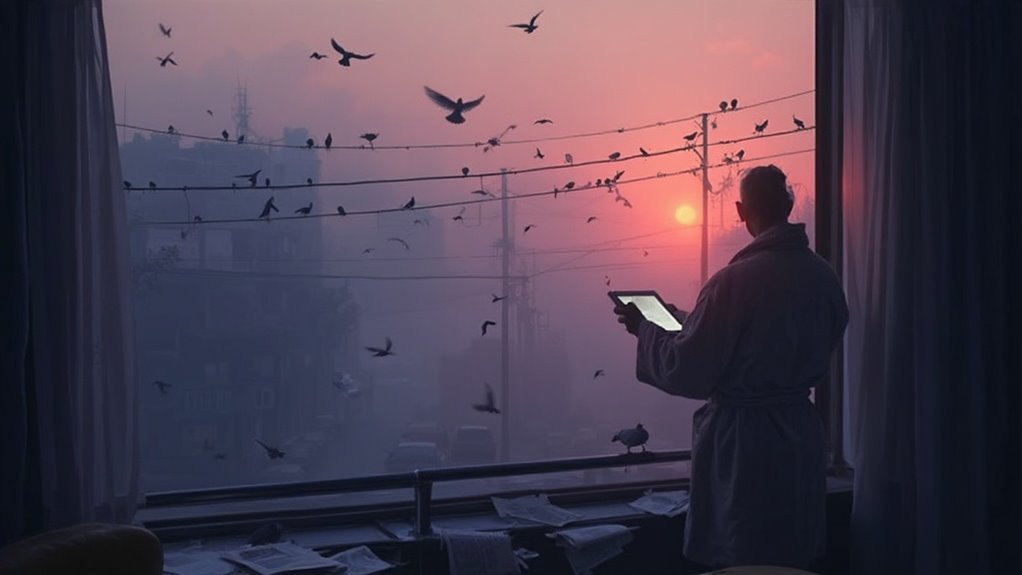
I've witnessed a fascinating shift in our urban dawn hours – where newspaper deliveries once dominated these quiet moments, nature has reclaimed the streets through an intricate network of bird activities. From peregrine falcons nesting on skyscrapers to sparrows utilizing hidden pocket parks, our cities have become vibrant ecosystems. Early morning birdwatchers now observe diverse species adapting brilliantly to metropolitan life, using everything from rooftop gardens to abandoned lots as their habitats. Even seasonal migrations continue through our concrete canyons, creating spectacular natural phenomena. This transformation reveals how wildlife thrives in unexpected urban spaces, waiting for those who rise early enough to notice.
Urban Birds Before Sunrise
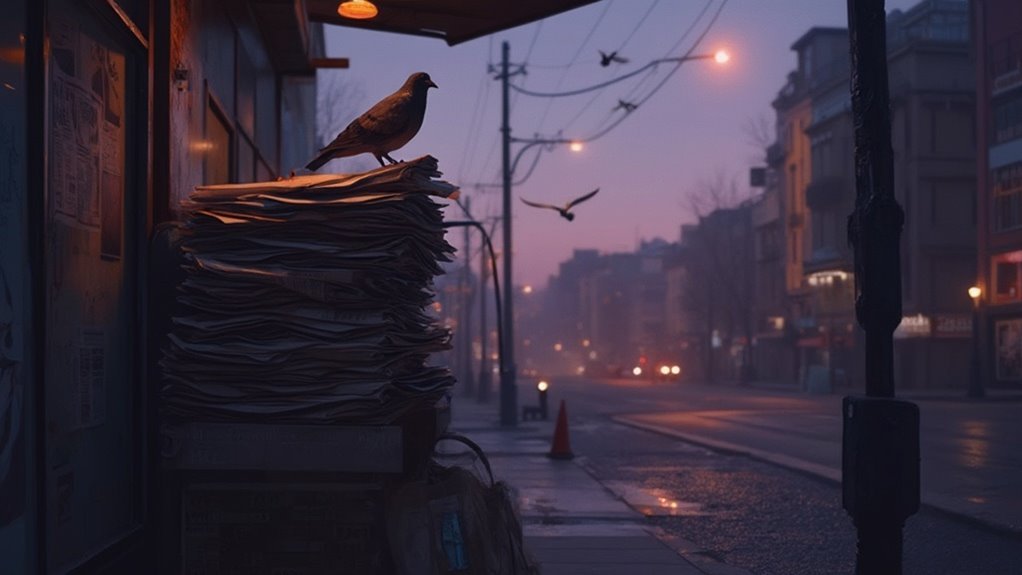
The early morning city holds a surprising array of avian activity, even before the sun peeks over the horizon. I've discovered that these pre-dawn hours reveal an urban ecosystem teeming with life, as birds begin their daily routines while most humans still sleep.
What fascinates me is how bird species diversity flourishes in these quiet moments. I regularly spot American robins and house finches starting their songs around 4:30 AM, followed by northern cardinals and mourning doves. These early risers provide critical urban ecosystem services, from controlling insect populations to dispersing seeds across city parks and gardens.
While tracking dawn birds, I've learned to identify them by their distinct morning calls and behaviors. Pigeons stretch their wings on building ledges, while sparrows hop between bushes searching for breakfast. The most remarkable observations happen near urban water features, where herons and kingfishers stake out prime fishing spots before competitors arrive. Even in dense metropolitan areas, these birds maintain complex ecological relationships, adapting their natural behaviors to the artificial landscape we've created.
Hidden Havens in Concrete Landscapes
Within our urban jungle, surprising pockets of greenery and wildlife sanctuaries exist where you'd least expect them. I've discovered quiet gardens tucked between skyscrapers and hidden courtyards where native birds find refuge from the concrete sprawl. These city sanctuaries often go unnoticed by rushed commuters, but they're vital lifelines for urban wildlife.
I regularly explore rooftop gardens where monarch butterflies rest during migration and abandoned lots that have transformed into wildflower meadows. Behind office buildings, I've found thriving micro-ecosystems in carefully maintained rain gardens. Even small patches of urban wilderness, like overgrown cemetery grounds or forgotten municipal parks, serve as crucial stopover points for birds.
What fascinates me most is how these spaces adapt to urban challenges. I've watched nesting boxes appear on building ledges and green walls climb parking structures. These innovative adaptations prove that nature finds a way, even in our densest cities. By recognizing and protecting these hidden havens, we're ensuring that urban wildlife continues to thrive alongside us in the concrete landscape.
Skyscrapers as Natural Habitats
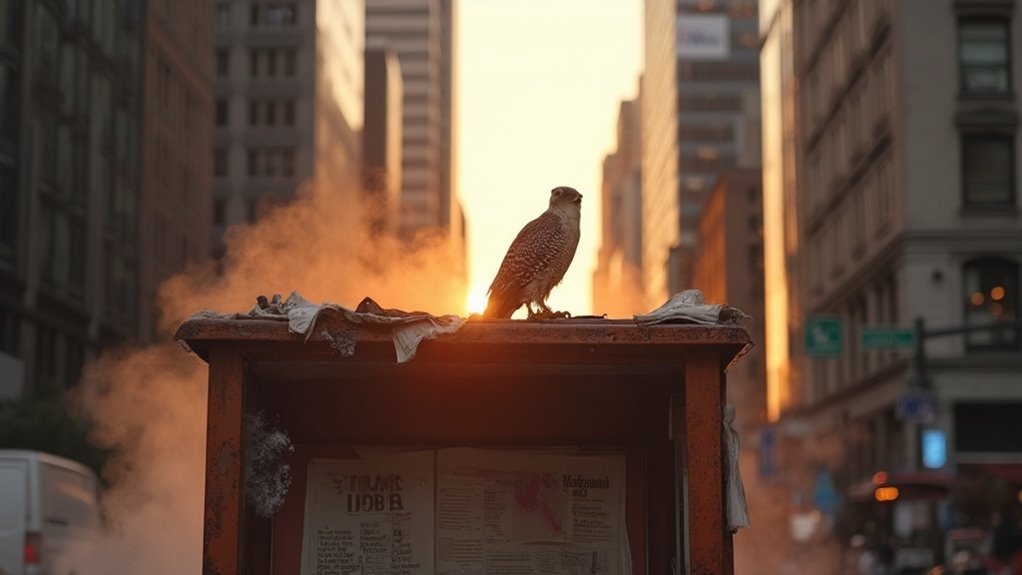
Towering glass and steel structures might seem like barriers to wildlife, but I've discovered they're actually becoming vibrant ecosystems in their own right. I've watched peregrine falcons claim high rise nesting sites, turning ledges and alcoves into perfect perches for hunting pigeons and starlings. These urban hunters have adapted brilliantly to city life, using skyscrapers as their cliffs.
What's even more fascinating is how rooftop garden habitats are transforming our skyline into interconnected green spaces. I've documented various species of songbirds, butterflies, and even bees utilizing these elevated oases. The gardens aren't just pretty features – they're crucial stepping stones for wildlife moving through urban areas.
You'd be surprised by the variety of life I encounter during my dawn observations. Kestrels nest in ventilation holes, swifts swoop between buildings catching insects, and warblers rest at window planters during migration. These adaptable creatures prove that nature doesn't just survive in our concrete jungle – it thrives by turning our architectural achievements into its own vertical wilderness.
Seasonal Migration Through Cities
Every spring and fall, I witness remarkable waves of migratory birds weaving through our urban canyons. I've discovered that cities serve as crucial stopover points along ancient flyways, where birds rest and refuel during their epic journeys. What's fascinating is how these travelers have adapted their nocturnal activity patterns to navigate our illuminated metropolises.
I've observed how migrating species adjust their food foraging behaviors to take advantage of urban resources. Where their ancestors once found insects in wetlands, today's birds scout our parks, green roofs, and even window boxes. They're remarkably resourceful, transforming parking lots into temporary feeding grounds and using building ledges as substitute cliffs.
What excites me most is how these seasonal visitors are reshaping our understanding of urban ecology. I've tracked warblers utilizing unexpected spaces, like small patches between buildings, and watched thrushes navigate by using tall structures as landmarks. These observations prove that our cities aren't just concrete barriers – they're evolving into dynamic waypoints in one of nature's most spectacular phenomena.
Adapting to Metropolitan Life
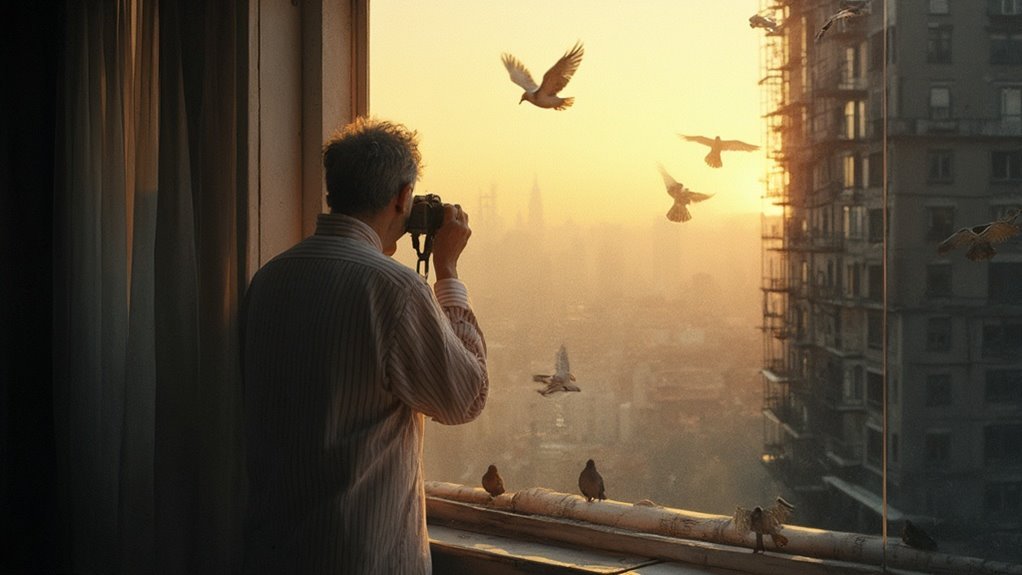
Perched along concrete ledges and nestled in pocket parks, urban birds display remarkable adaptations to city living that I've documented over years of observation. I've watched them transform human structures into their own domains, turning skyscraper windowsills into nesting sites and learning to time their foraging with human schedules.
These commuter wildlife interactions fascinate me most during rush hour, when I notice birds swooping down to collect discarded food scraps moments after crowds disperse. Their urban foraging adaptations show incredible ingenuity – pigeons now recognize takeout containers as food sources, while hawks have learned to hunt near outdoor cafes where smaller birds gather.
I've tracked how species modify their behaviors to thrive in our concrete jungle. Many birds have altered their dawn chorus to compete with traffic noise, singing at higher pitches or shifting their performances to quieter hours. They've even adapted their nesting materials, weaving cigarette butts and synthetic fibers into their homes. It's a testament to nature's resilience that these creatures don't just survive but innovate alongside us in our metropolitan spaces.
Conservation in Urban Spaces
Within bustling cities, three key conservation approaches have helped urban birds thrive despite mounting pressures. First, I've witnessed how neighborhood wildlife corridors connect fragmented habitats, creating safe passages for birds to move between parks and gardens. By linking these green spaces, we're building crucial networks that support diverse species and their daily needs.
Second, I'm seeing more urban ecosystem restoration projects transform neglected spaces into vibrant habitats. When we convert vacant lots into native plant gardens or restore wetlands along urban streams, we create essential stopping points for both resident and migratory birds. These restored areas provide food, shelter, and nesting sites that birds desperately need.