Coffee Tours Through Southeast Asia

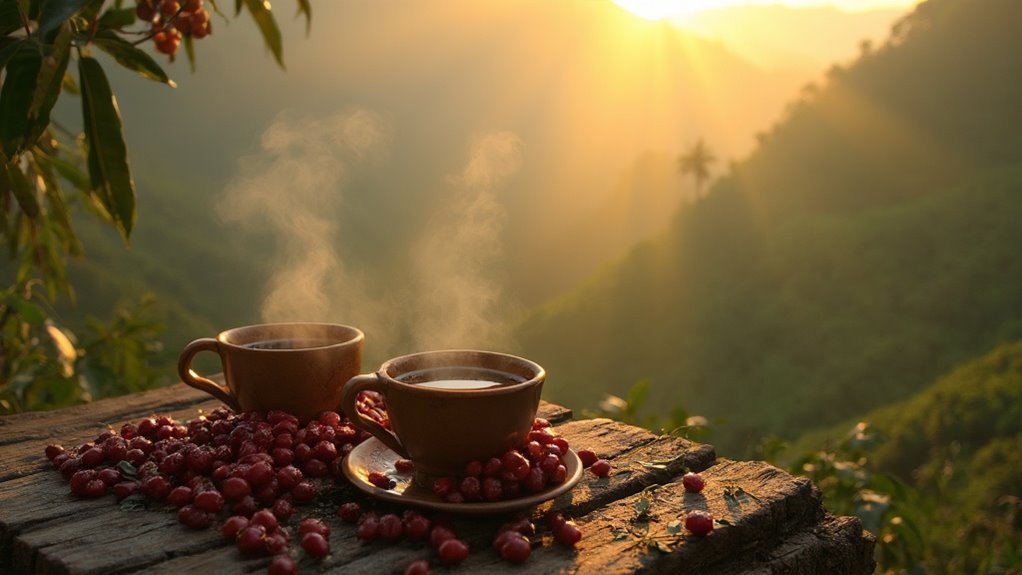
I've explored Southeast Asia's vibrant coffee scene, where colonial heritage meets modern innovation. You'll discover everything from Vietnam's famous phin-filtered coffee to Indonesia's traditional wood-fired roasting methods. Throughout the region, local farmers blend centuries-old knowledge with sustainable practices, while artisanal roasters craft bold new flavor profiles. I love how the region's cafés transform traditional spaces into Instagram-worthy destinations, offering unique experiences like cherry picking and cupping sessions. From farm tours to brewing workshops, Southeast Asia's coffee culture holds countless treasures waiting to be uncovered.
Colonial Coffee Heritage
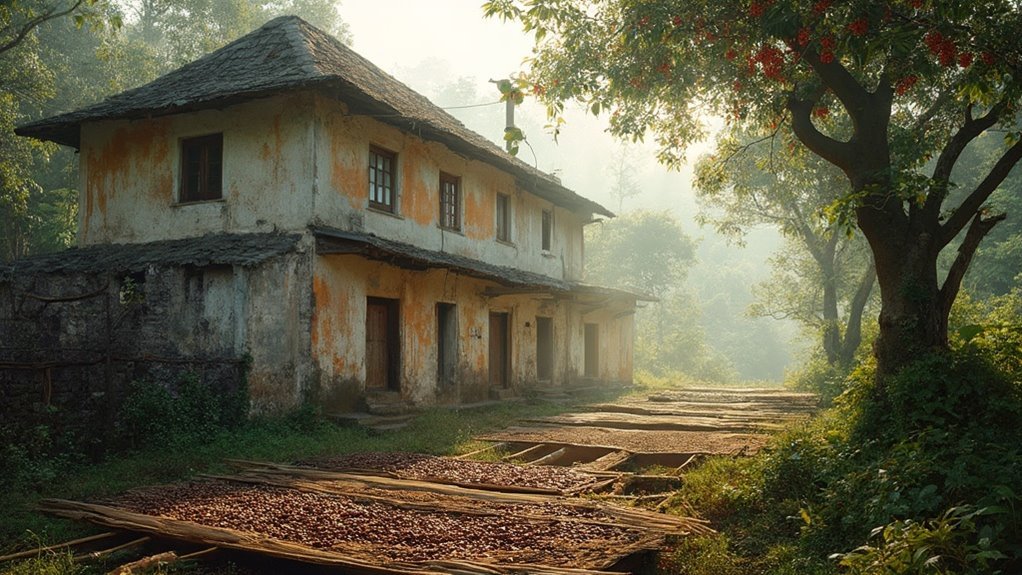
While European colonizers originally brought coffee cultivation to Southeast Asia in the 17th century, they couldn't have predicted how deeply it would transform the region's agricultural and cultural landscape. I've discovered that Dutch traders first planted coffee in Java, leading to Indonesia's emergence as a coffee powerhouse, while French colonists established Vietnam's coffee industry in the 1800s.
Today, I'm witnessing how these colonial-era plantations have evolved into sustainable farming practices that honor both tradition and innovation. The old European estates have largely given way to community-based cooperatives, where local farmers apply centuries of knowledge while embracing modern techniques.
In Vietnam's Central Highlands, I've seen former French plantations transformed into model farms that combine heritage robusta varieties with cutting-edge processing methods.
What fascinates me most is how Southeast Asian coffee growers have reclaimed their colonial coffee heritage, turning it into something uniquely their own. They've preserved the best aspects of traditional cultivation while developing distinctive local varieties and processing methods that now influence global coffee trends.
Artisanal Roasting Traditions
A handful of roasted beans tells the story of Southeast Asia's distinct coffee cultures. As I travel from traditional roasteries in Vietnam to modern facilities in Thailand, I'm witnessing a revolution in artisanal coffee production that blends age-old techniques with contemporary innovations.
In Indonesia, I've discovered roasters who use wood-fired methods passed down through generations, carefully monitoring heat distribution by sound and smell. These artisans are now integrating sustainable sourcing practices while preserving their traditional craft. They're working directly with local farmers to ensure bean quality from harvest to roast.
Thailand's specialty roasters have particularly impressed me with their quality control processes. I've observed them using advanced roasting profiles while maintaining careful documentation of each batch. They're pioneering new approaches to light and medium roasts that highlight the unique characteristics of regional beans.
What excites me most is how Vietnamese roasters are revolutionizing the industry by combining their famous robusta expertise with cutting-edge technology. They're creating bold new flavor profiles that challenge conventional wisdom about what's possible with traditionally dark-roasted beans.
Farm to Cup Experience
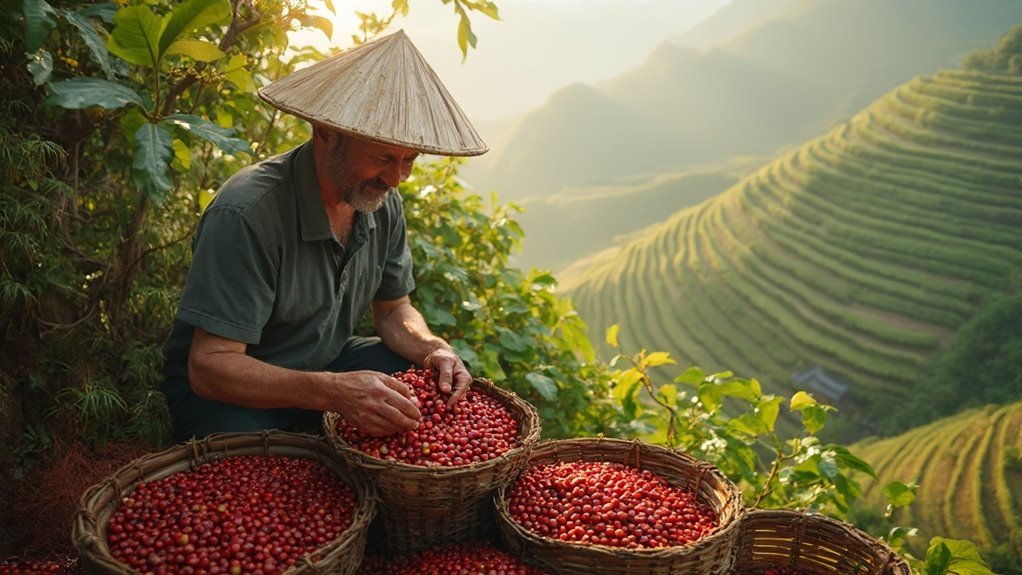
The journey from coffee farm to roasted cup reveals Southeast Asia's rich agricultural heritage. I've witnessed firsthand how local farmers blend traditional knowledge with sustainable farming practices across Vietnam's Central Highlands and Indonesia's volcanic slopes. You'll discover that each region's unique approach to cultivation shapes the final flavor in your cup.
When I explore these farms, I'm struck by how ethical sourcing considerations have transformed the industry. You can now trace your coffee's origins through QR codes and blockchain technology, connecting directly with the farmers who grow your beans. I'll show you how innovative processing methods, from natural sundrying to controlled fermentation, are revolutionizing flavor profiles while maintaining environmental responsibility.
What makes these tours transformative is experiencing every step: picking ripe cherries alongside farmers, watching the wet processing, and participating in cupping sessions. You'll learn to identify subtle differences between beans grown at various altitudes and in different soils. I've found that understanding these nuances not only deepens your appreciation for your daily brew but also helps you make more informed choices about supporting sustainable coffee communities.
Modern Coffee Culture Revolution
Southeast Asian coffee shops have redefined modern café culture through innovative brewing methods and immersive experiences. I've watched local cafés transform from traditional kopitiam-style shops into sleek, Instagram-worthy spaces that rival those in Melbourne or Seattle. What's remarkable is how they've maintained their cultural identity while embracing contemporary trends.
When I visit these modern establishments, I'm struck by their commitment to sustainable sourcing and ethical business practices. Many café owners I've met work directly with local farmers, ensuring fair compensation while promoting environmentally conscious cultivation methods. They're not just selling coffee; they're building a movement.
The region's coffee revolution goes beyond aesthetics. I've seen baristas experiment with unique brewing techniques, from siphon coffee makers to cold brew towers that look like chemistry sets. They're incorporating local ingredients too – palm sugar in Vietnamese egg coffee, pandan in Malaysian lattes. Even traditional drinks are getting modern twists, like the nitro-charged Indonesian kopi susu. This innovation hasn't just changed how Southeast Asians drink coffee; it's influenced global coffee culture, making the region a must-visit destination for serious coffee enthusiasts.
Regional Brewing Methods
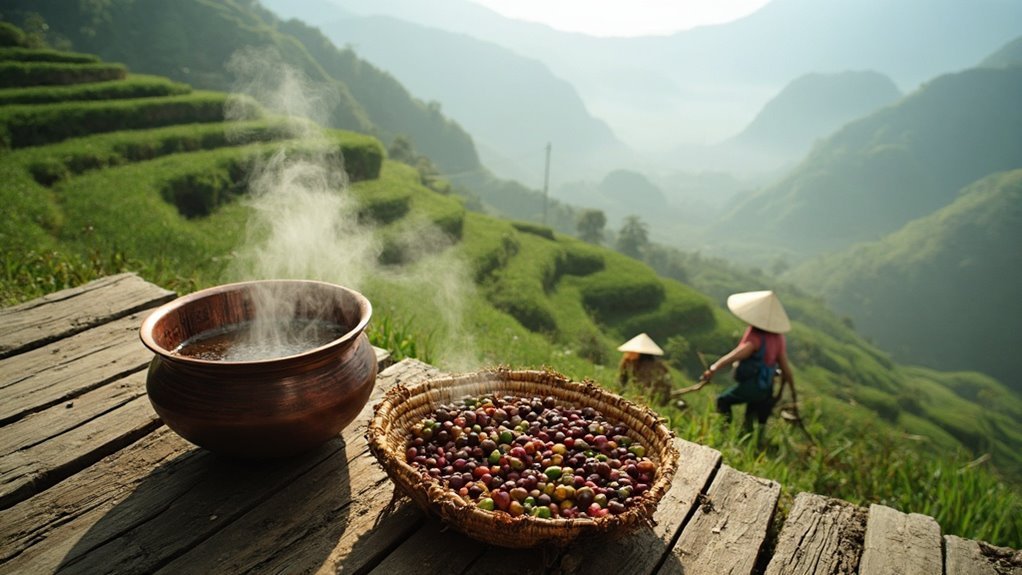
Traditional brewing methods across this vibrant region showcase centuries of coffee-making expertise. As I explore Southeast Asia's coffee landscape, I'm continually amazed by the unique brewing equipment that defines each country's approach.
In Vietnam, I've watched skilled baristas use the iconic phin filter – a simple yet ingenious metal dripper that sits atop your cup, creating a bold brew that perfectly complements the condensed milk below.
Moving through Indonesia, I've encountered the traditional preparation techniques of kopi tubruk, where coarsely ground beans are boiled directly in the cup, creating an intensely rich experience. In Malaysia and Singapore, I've seen the theatrical "pulling" of teh tarik and kopi, where the drink is poured between vessels from increasing heights to create a creamy, frothy texture.
What fascinates me most is how these methods reflect local ingenuity. From Thailand's adaptation of sock filters to Laos's repurposed French press techniques, each country has developed distinctive tools and processes that extract maximum flavor from their beans. I've learned that innovation in coffee brewing isn't always about new technology – sometimes it's about perfecting time-tested methods.


