Dawn Train Rides: Meditations on Movement

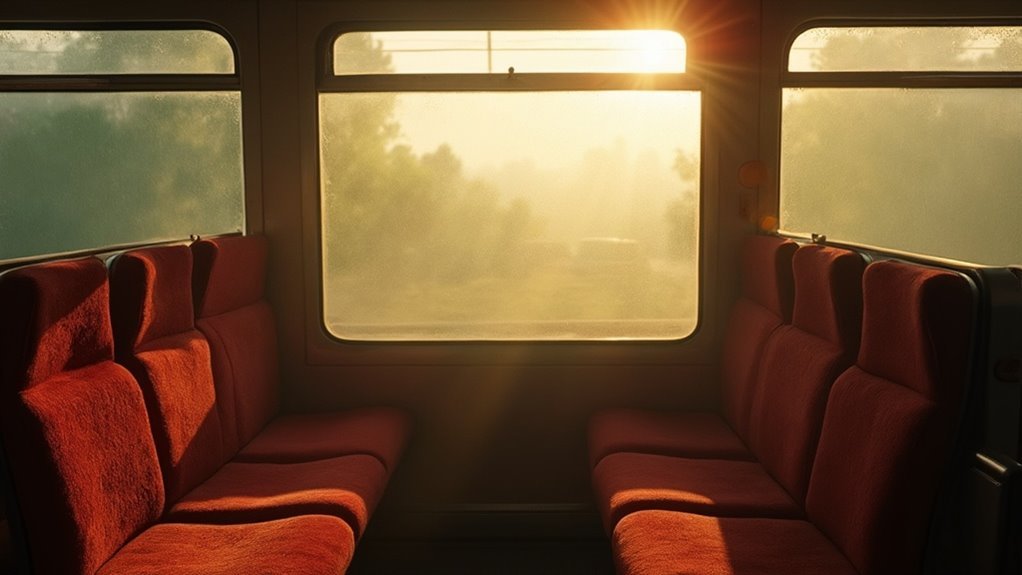
I've found dawn train rides offer a uniquely meditative experience of movement and time. As we glide through the liminal space between night and day, fellow passengers and I form a silent community, united by the mechanical rhythms of wheels on steel. Through windows, I witness towns awakening – bakers starting ovens, newspaper deliverers making rounds, fishing boats setting out. The landscape shifts like a developing photograph, each familiar stretch of track revealing itself anew in the growing light. These journeys between darkness and daybreak hold secrets that only early morning travelers can truly understand.
The Liminal Hours
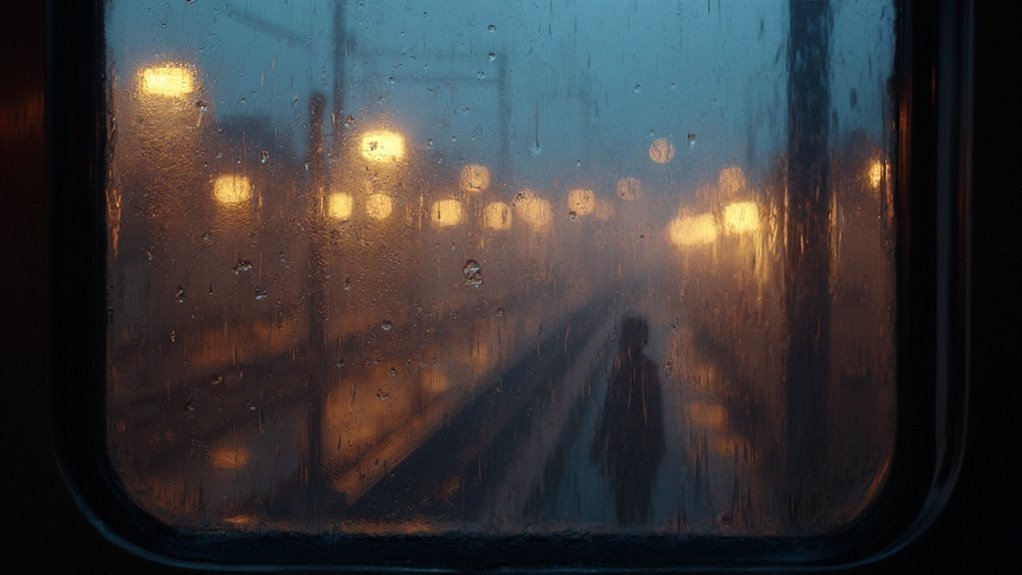
Darkness clings to the windows as I board the first train of the morning. I'm suspended between night and day, occupying that strange space where time feels elastic and reality bends at the edges. The platform's fluorescent lights cast fleeting shadows that dance across empty benches, creating a choreography only visible to early risers like us.
These liminal hours hold a different kind of energy. You'll find it in the transient silences between station announcements, in the way fellow passengers drift between sleep and wakefulness. We're all temporary inhabitants of this in-between space, where the usual rules of time seem to soften and blur.
I've come to understand that dawn train rides aren't just about getting from point A to B. They're portals, thresholds where transformation happens in small, barely perceptible ways. As the sky begins to lighten, I watch the world outside slowly materialize from darkness. These moments remind me that we're always in transit, always crossing boundaries – not just physical ones, but the invisible lines between who we were and who we're becoming.
Fellow Travelers in Twilight
The faces of early morning train riders tell stories that daylight rarely sees. I watch them – solitary sentinels of the dawn hours – as they drift between sleep and wakefulness, their features illuminated by the soft glow of phone screens and platform lights. There's an unspoken understanding among us, a shared solace in knowing we're all part of this liminal space between night and day.
I've come to recognize the regulars: the nurse ending her night shift, still in scrubs with determination etched across her face; the construction worker in his neon vest, thermos in hand; the student with textbooks spread across her lap, cramming for an early exam. We're a transient community, connected by the rhythm of steel wheels and the quiet desperation of early risers.
What fascinates me most is how we've developed our own silent language – a slight nod here, a practiced shuffle there to make room for someone's bag. We're all performers in this twilight theater, each playing our part in the daily commute's choreography.
Rhythms of the Rails
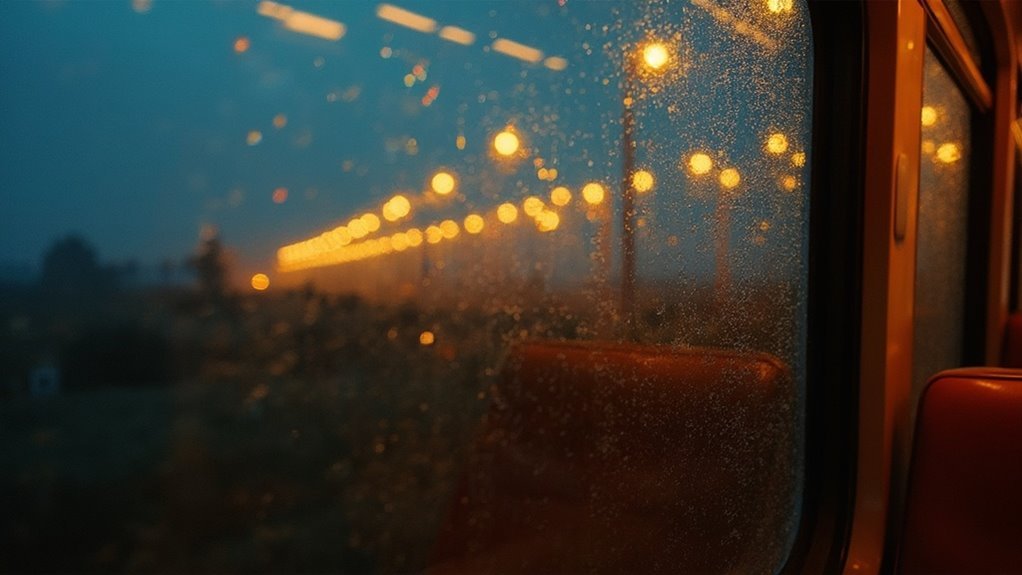
Through the pre-dawn quiet, mechanical rhythms punctuate my journey – wheels clicking against track joints, doors whispering open and shut, brakes squealing their metallic protests. These sounds form a symphony of motion, a percussion ensemble that marks time as I hurtle through space. I've learned to read these rhythms like a score, anticipating curves, stops, and accelerations through their changing tempos.
Against the window, I catch transient reflections of myself superimposed on fleeting landscapes. The glass becomes a palimpsest of interior and exterior worlds, merging my contemplative gaze with rushing trees and distant lights. I'm simultaneously here and there, static and in motion, as the train's rhythm works its hypnotic effect.
There's an algorithm to this movement, a pattern that emerges from thousands of synchronized parts. I feel it in the subtle swaying of the carriage, in the predictable intervals between track joints. It's a dance of precision engineering and physics that transforms mere transportation into kinetic meditation, each journey becoming a lesson in the poetry of mechanical motion.
Windows Into Waking Towns
Beyond darkened windows, I watch towns stir to life in the early hours. Each station brings a new scene: bakers pulling fresh loaves from ovens, newspaper deliverers tossing rolled papers onto porches, and cafe owners flipping their signs from "Closed" to "Open." These fleeting landscapes blur past as we accelerate, then crystallize into sharp focus as we decelerate.
I've become a collector of these dawn moments, observing how different communities greet the day. In one town, factory workers stream toward industrial gates, their lunch boxes swinging in rhythm. In another, fishing boats push off from weathered docks, their lights dotting the harbor like scattered stars. The train creates a moving gallery of life's opening acts.
My fellow sleepy commuters often miss these transitions, their heads nodded forward in morning drowse. But I press closer to the glass, watching street lamps dim and sunlight creep across buildings. Each town unveils itself differently – some burst awake while others stretch slowly into consciousness, and I'm privileged to witness them all.
Between Darkness and Dawn
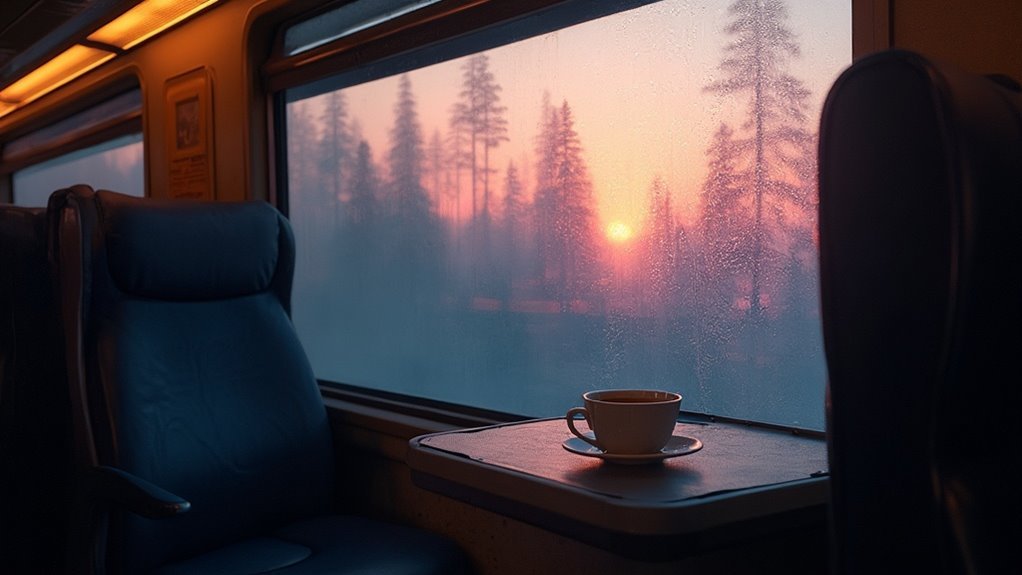
Every morning, I inhabit those liminal moments when night hasn't quite released its grip and dawn hasn't fully claimed victory. Through the train window, I watch fleeting shadows dance across the tracks, playing hide-and-seek with the first hints of daybreak. It's a raw, unscripted performance that transforms the mundane into something electric.
The awakening landscapes reveal themselves in layers, like a photographer's print emerging in development fluid. Trees materialize from purple-tinged silhouettes into detailed forms. Buildings shed their anonymous nighttime shapes, gradually displaying their distinctive features. I've learned to read these transitions like a visual language – each subtle shift in light tells its own story.
What fascinates me most is how this interplay between darkness and light reshapes familiar routes into something new each day. The same stretch of track never looks identical twice. Sometimes I'll catch a fox darting between worlds, or witness steam rising from fields like earth's own exhalation. These moments exist in a realm that's neither here nor there – a temporary space where anything feels possible.


