The Mental Game of Morning WorkoutsMorning Market Watch: Understanding Global Trends


I've found that a successful morning market watch requires both mental discipline and a systematic approach to analyzing global trends before U.S. markets open. I start by checking Asian market performance, particularly the Nikkei 225 and Hang Seng indices, then move to currency pair movements during European trading. I monitor major economic data releases, track global news events that could impact markets, and analyze pre-market trading signals. This strategic routine helps me identify potential opportunities and risks early. Let's explore how you can develop your own effective morning market analysis routine.
Asian Markets Overnight Impact
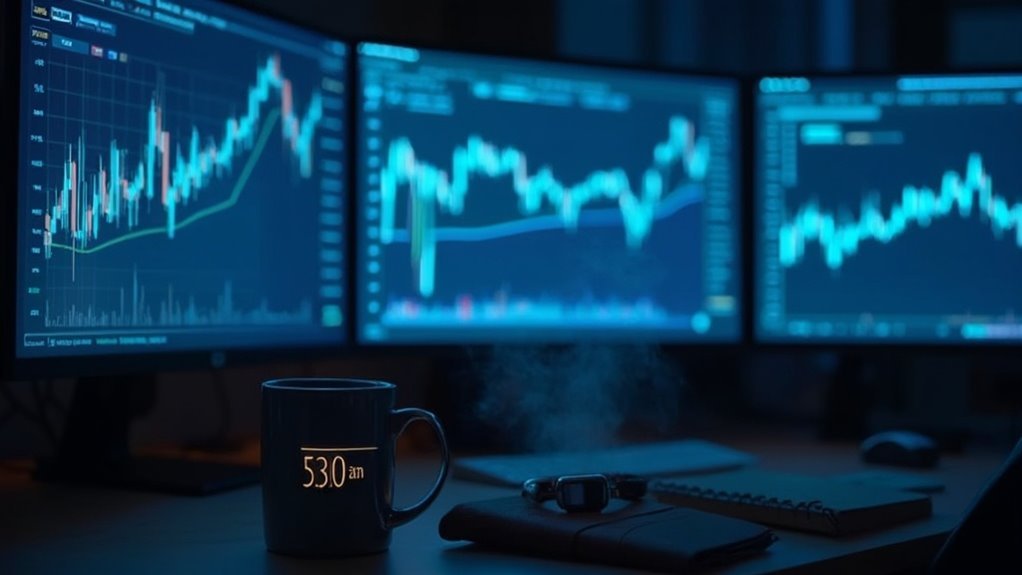
During my pre-market analysis, I've noticed that Asian markets consistently influence U.S. equity futures before the opening bell. I track key indices like the Nikkei 225, Hang Seng, and Shanghai Composite to anticipate potential market movements in our domestic exchanges. Asian market volatility often creates ripple effects that shape our trading day before it begins.
I've developed a system to capitalize on overnight trading opportunities by monitoring Asian session developments. When major news breaks in Asian markets – whether it's Chinese economic data, Bank of Japan policy changes, or regional geopolitical events – I adjust my trading strategy accordingly. This approach has helped me stay ahead of market-moving events that typically impact U.S. stocks.
The interconnected nature of global markets means that significant moves in Asia frequently telegraph what's coming for U.S. traders. I pay particular attention to Asian tech stocks and manufacturing data, as these sectors often correlate strongly with U.S. market performance. By understanding these relationships, I can better position myself for the trading day ahead and identify potential entry and exit points before most traders begin their day.
Currency Pairs Trading Dynamics
Beyond Asian market movements, currency pair dynamics shape my early morning trading strategy. I've learned that the first few hours of trading often set the tone for major currency pairs, especially during the European market opening. By monitoring exchange rate fluctuations between key pairs like EUR/USD and GBP/USD, I can identify potential trading opportunities before the U.S. session begins.
I pay particular attention to currency market volatility during these early hours, as it often reflects institutional positioning and overnight developments. When I spot divergences between currency movements and other market indicators, I look for potential market inefficiencies to exploit. I've found that cross-currency pairs, especially those involving the Japanese yen, can provide valuable insights into risk sentiment and carry trade activity.
Major Economic Data Releases
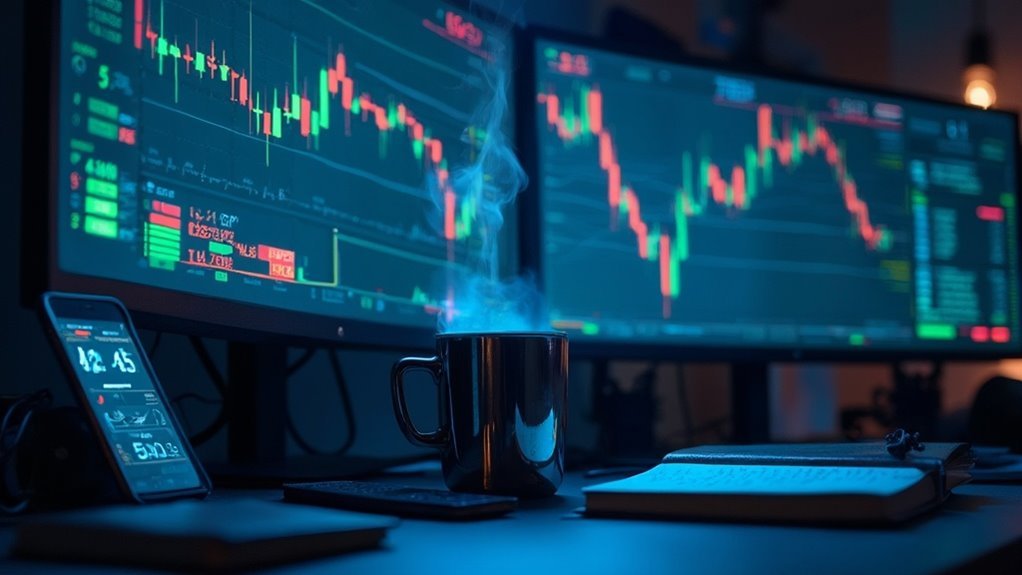
Monitoring major economic data releases shapes my morning trading routine, as these announcements can trigger significant market movements. I've learned to prioritize key indicators like GDP, employment figures, and inflation rates, which provide crucial insights into macroeconomic performance across different regions.
I track release schedules meticulously, focusing on high-impact data from major economies. When the U.S. Federal Reserve announces interest rate decisions, I'm ready to analyze their implications for both domestic and international markets. I've developed a systematic approach to interpreting these releases, comparing actual figures against market expectations to anticipate potential price movements.
Stock market indicators often respond dramatically to these economic releases, creating opportunities I can leverage. I pay special attention to manufacturing data, consumer confidence indices, and retail sales figures, as they offer valuable signals about economic health. By staying ahead of these releases, I'm able to position myself strategically before major market shifts occur. I've found that success in morning trading isn't just about reacting to news – it's about understanding how these economic indicators interconnect and influence global market sentiment.
Global News Market Movers
Global news events shape market dynamics alongside economic data releases. I've found that monitoring breaking international developments gives me a crucial edge in understanding market movements before they fully materialize. When geopolitical tensions emerge in key regions, I watch how they ripple through various asset classes, particularly in commodity prices and currency valuations.
I track three primary categories of global news that consistently move markets: political developments (elections, policy shifts, conflicts), natural disasters or environmental events, and major corporate actions (mergers, bankruptcies, leadership changes). Each of these can trigger immediate market responses and longer-term trends that affect investment strategies.
I've developed a system to evaluate news impact by assessing its geographical reach, sector influence, and duration potential. For instance, when trade disputes escalate between major economies, I analyze how this might affect supply chains, commodity prices, and regional currencies. By staying ahead of these global narratives, I can better anticipate market reactions and adjust positions accordingly. This proactive approach helps me identify both risks and opportunities before they become obvious to the broader market.
Pre-Market Trading Signals

Before the opening bell, pre-market trading signals offer vital clues about the day's potential market direction. I've found that analyzing these early indicators helps me anticipate market movements and identify prime trading opportunities before most investors even start their day. By monitoring futures contracts, overseas markets, and pre-market volatility patterns, I can better position myself for what's ahead.
I track several key signals each morning: earnings releases, economic data announcements, and significant news events that could impact stock prices. I've learned that volume in pre-market trading often indicates which stocks might experience substantial moves during regular trading hours. When I spot unusual pre-market activity, I'll dig deeper to understand what's driving those movements.
Electronic trading platforms now give me access to real-time pre-market data, which I use to spot emerging trends and potential reversals. I've developed a system that combines technical analysis with pre-market indicators to identify high-probability setups. This approach helps me filter out market noise and focus on actionable trading opportunities that align with my strategy.


