Coffee Economics: From Bean to Business

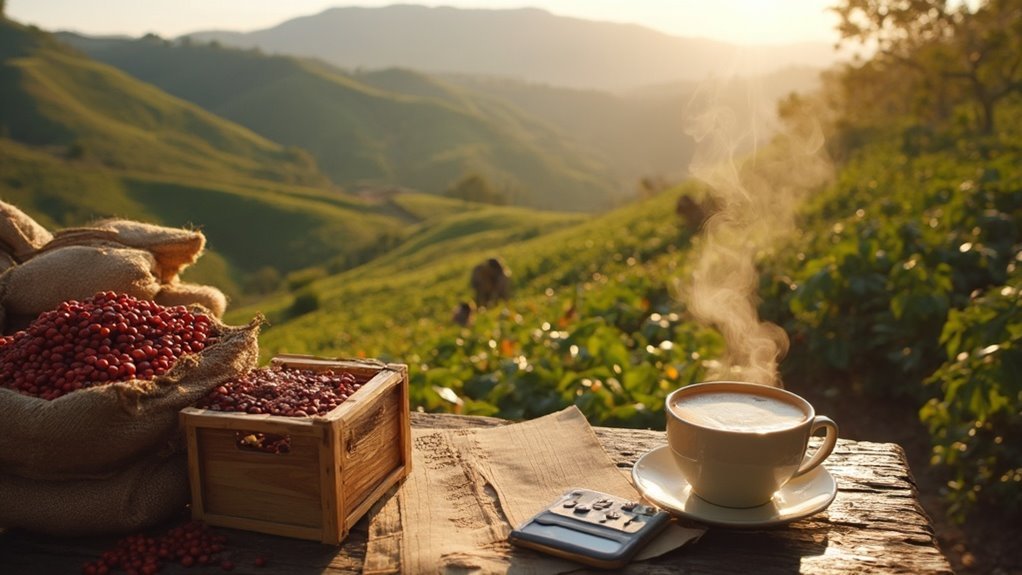
I'm seeing coffee's economic journey become increasingly complex as it moves from small farms to your cup. The $200 billion global industry supports 25 million farmers through a web of traders, roasters, and retailers – but faces major disruptions from climate change and market volatility. While Fair Trade has helped some farmers earn more, innovative approaches like blockchain tracking and direct trade relationships are reshaping traditional supply chains. The rise of specialty coffee culture has transformed coffee from commodity to craft, with sophisticated customers willing to pay premium prices. Let's explore how this fascinating bean-to-business evolution continues to unfold.
The Global Coffee Supply Chain
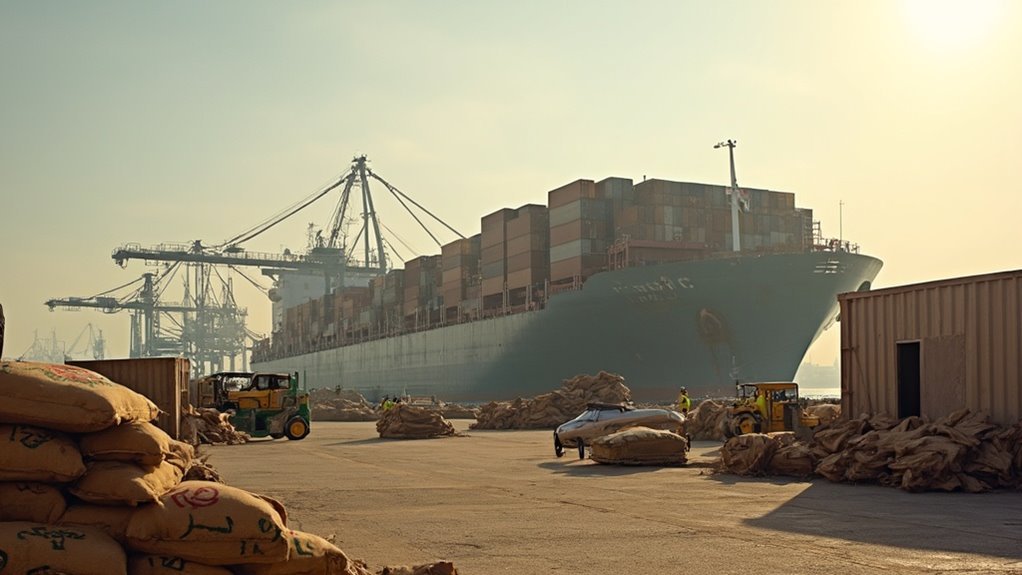
From out of small farms to massive retail operations, the global coffee supply chain spans continents and connects millions of people. I've studied how coffee moves from remote mountainsides to your morning cup, and it's a complex journey that reveals both challenges and opportunities for innovation.
At the production level, I'm seeing farmers embrace advanced agricultural practices like precision farming and sustainable growing methods. These innovations help them adapt to climate change while improving bean quality.
But what's particularly interesting is how technology is transforming the middle stages of the supply chain. I've noticed that market consolidation among traders and roasters has created both efficiency and vulnerability. While larger companies can optimize logistics and maintain consistent quality, they're also more susceptible to disruptions.
That's why I'm tracking new developments in blockchain traceability and direct trade platforms that connect farmers straight to roasters. These tools aren't just improving transparency – they're reshaping traditional power dynamics.
What excites me most is how digital platforms are enabling smaller players to compete globally, potentially democratizing a supply chain that's historically favored large corporations.
Fair Trade Impact and Pricing
Looking at the Fair Trade coffee movement's impact over the past few decades, I've tracked both its successes and limitations in transforming coffee pricing. I've found that while Fair Trade has established crucial minimum price guarantees for farmers, it's only reaching about 25% of coffee producers worldwide. The movement has successfully pushed sustainable farming practices into the mainstream, but there's still work to be done.
When I analyze equitable profit sharing in the coffee industry, I see that Fair Trade premiums typically add $0.20-0.40 per pound to farmer earnings. This increase, while meaningful at the farm level, represents a fraction of what consumers pay for their coffee. I've discovered that innovative direct trade relationships between roasters and farmers often yield better results than traditional Fair Trade arrangements.
I believe the future of fair coffee pricing lies in hybrid models that combine Fair Trade's standardized protections with technology-enabled transparency. By using blockchain tracking and direct-to-farmer payment systems, we're seeing new ways to ensure farmers capture a larger share of coffee's final value while maintaining sustainable farming practices.
Climate Change Effects on Production
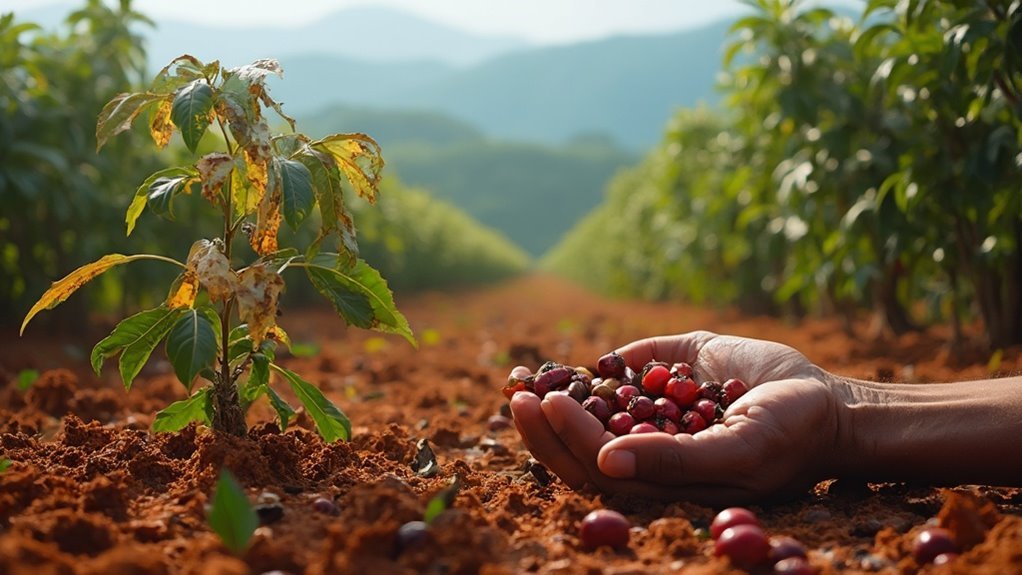
Beyond fair pricing concerns, climate change poses an immediate threat to global coffee production. I've tracked how rising temperatures are drastically altering traditional growing regions, forcing farmers to adapt or abandon their crops entirely. Shifting drought patterns have disrupted flowering cycles, while increased rainfall in other areas has intensified the spread of devastating diseases like coffee rust.
I want to emphasize how these environmental changes demand innovative solutions. Coffee farmers must now implement sophisticated disease mitigation strategies, including resistant plant varieties and improved irrigation systems. I'm seeing pioneering farms utilize shade-grown techniques and intercropping methods to create more resilient micro-climates. Some producers are even exploring higher elevations to maintain optimal growing conditions.
The industry's future depends on our ability to adapt quickly. Research indicates that without significant intervention, we could lose up to 50% of suitable coffee-growing land by 2050. I believe the key lies in combining traditional farming wisdom with cutting-edge technology – from drought-resistant cultivars to precision agriculture tools that help farmers respond to changing weather patterns in real-time.
Coffee Market Price Fluctuations
The volatile nature of coffee market prices creates significant challenges for industry stakeholders. I've observed that price swings can be dramatic, often driven by weather events, geopolitical tensions, and shifting supply-demand dynamics. When I analyze market data, I see how these fluctuations ripple through the entire supply chain.
I've found that coffee bean reserves play a crucial role in stabilizing prices. When major producing countries maintain adequate stockpiles, they can better weather market turbulence. Yet, I notice that these reserves are increasingly under pressure from growing global demand and climate-related production disruptions.
Roaster pricing strategies have evolved to address this volatility. I'm tracking how forward contracts and hedging mechanisms help companies lock in prices, though these tools aren't available to all market participants. What's particularly interesting is how specialty roasters are developing direct trade relationships to bypass traditional market mechanisms.
I believe the future of coffee price stability lies in innovative approaches to risk management. Through technological solutions and new market instruments, we're seeing more sophisticated ways to manage these fluctuations while maintaining value for both producers and consumers.
Third Wave Coffee Revolution

While traditional coffee markets focused primarily on commodity pricing, third-wave coffee has revolutionized how consumers value and experience their daily brew. I've watched this movement transform coffee from a simple caffeine fix into an artisanal experience, where origin, roasting methods, and brewing techniques take center stage.
Specialty coffee trends have redefined coffee shop business models, shifting focus from quick service to immersive experiences. I've seen cafes invest in sophisticated equipment, train expert baristas, and develop direct relationships with farmers to ensure quality and sustainability. Today's consumers aren't just buying coffee; they're investing in stories, craftsmanship, and unique flavor profiles.
What fascinates me is how this revolution has created new economic opportunities. Small-batch roasters, independent cafes, and skilled baristas have carved out profitable niches in a market once dominated by large chains. The willingness of customers to pay premium prices for exceptional coffee has made these business models viable. I'm continually amazed by how third-wave coffee has elevated a common beverage into a craft worthy of wine-like appreciation, fundamentally changing the economics of the industry.
Future of Coffee Markets
Building on third-wave coffee's transformative impact, emerging market trends suggest even more dramatic changes ahead. I'm seeing a radical shift in how coffee futures trading will operate, with blockchain technology enabling unprecedented transparency in pricing and supply chain tracking. This evolution will help both farmers and traders make more informed decisions while reducing market manipulation risks.
Sustainable sourcing models will become the industry standard rather than a premium option. As climate change threatens traditional growing regions, I'm watching companies invest heavily in drought-resistant varieties and alternative growing methods. These investments aren't just about environmental responsibility – they're crucial for securing future supply.
Direct trade relationships between roasters and farmers will expand through digital platforms, and I expect to see the rise of micro-lot marketplaces where small producers can connect directly with specialty buyers. We'll also witness the growth of domestic consumption in traditional producing countries, particularly in Brazil and Vietnam, reshaping global trade flows. The coffee market of tomorrow won't just be about moving beans from south to north – it'll be a complex web of multi-directional trade driven by sustainability and technology.


