Coffee House Jazz: A Morning Meditation

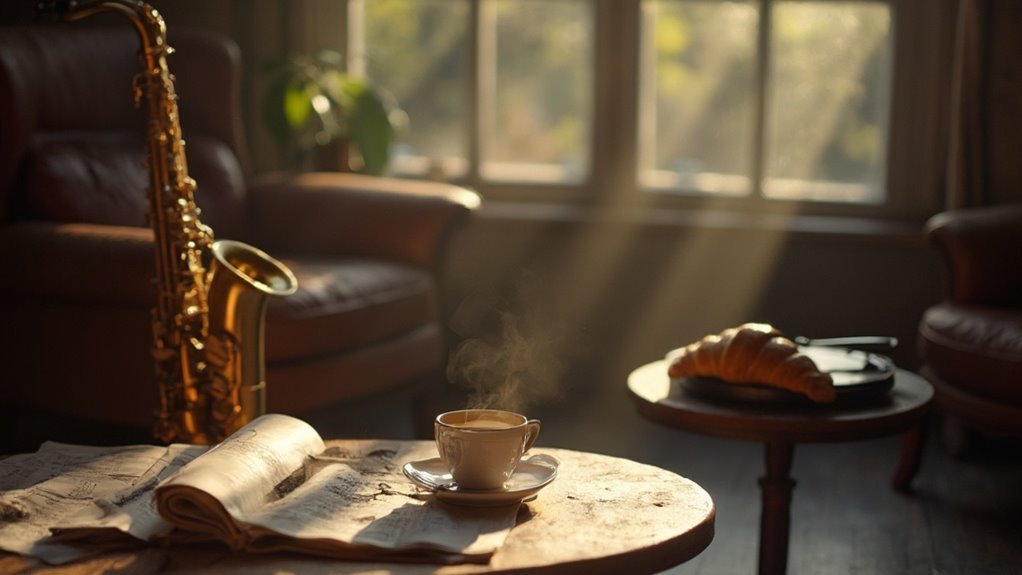
I've discovered that coffee house jazz creates the perfect morning meditation through its blend of intimate acoustics and mindful compositions. Artists like Bill Evans and Miles Davis pioneered this genre in 1960s Greenwich Village cafes, where warm lighting and cozy spaces naturally enhanced their introspective sounds. Today, I start each morning with carefully curated playlists that layer gentle instrumental tracks with dynamic pieces, matching the gradual awakening that comes with that first cup of coffee. The fusion of craft coffee culture and innovative jazz continues to evolve, offering new ways to experience this timeless morning ritual.
The Origins of Coffee Jazz
Coffee house jazz emerged in the early 1960s when musicians began performing mellow, laid-back tunes in coffee shops across Greenwich Village and San Francisco. I've traced how these intimate venues created the perfect atmosphere for experimental jazz that paired naturally with the ritual of sipping coffee. Musicians found that the caffeine fueled compositions flowed effortlessly in these cozy spaces, where listeners could experience both their coffee and music in contemplative doses.
What fascinates me about these bean to beat connections is how coffee house proprietors became accidental curators of a new jazz movement. They'd invite local musicians to play during off-peak hours, creating an ecosystem where artists could test new material without the pressures of formal concert venues. This spawned a distinctly American fusion – part bebop, part folk, and part classical – all filtered through the lens of coffee house culture.
The movement gained momentum as more venues opened their doors to jazz performers, establishing a circuit that nurtured both emerging talent and established musicians looking to explore softer, more introspective sounds.
Creating the Perfect Ambiance
A careful balance of sound, lighting, and space creates the quintessential coffee house jazz ambiance. I've found that transforming your space into a jazz-infused sanctuary requires attention to every sensory detail. When I dim the overhead lights and add warm, relaxing lighting through strategically placed floor lamps, I instantly notice how the music seems to float more naturally through the room.
I recommend arranging your furniture to create intimate pockets of conversation while maintaining clear sightlines to where the music originates. Cozy seating arrangements, featuring a mix of plush armchairs and small tables, encourage listeners to settle in and absorb the musical experience. I've discovered that positioning seats at 45-degree angles, rather than directly facing each other, promotes both engagement and comfortable listening.
You'll want to consider acoustic treatments that enhance the music without overwhelming conversation. I suggest incorporating soft surfaces like area rugs and upholstered furnishings to absorb excess sound while maintaining the crisp clarity of each note. Remember, the goal is to craft an environment where the jazz becomes an essential thread in the fabric of the space.
Essential Coffee House Playlists
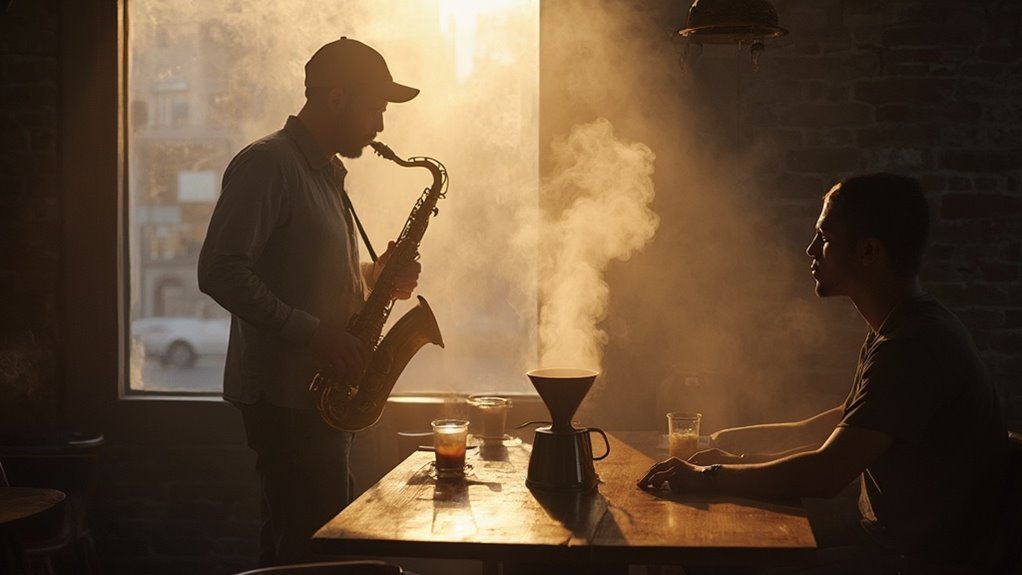
With the perfect ambiance set, the right musical selection becomes your next focus. I've found that crafting the ideal coffee house playlist requires the same attention to detail as curating coffee selections – it's about creating harmonious moments that enhance the overall experience.
I recommend starting your morning playlist with gentle instrumental tracks that mirror the gradual awakening of your senses. Think Bill Evans' piano compositions or Miles Davis' softer pieces, which pair beautifully with bold morning brews.
As the day progresses, I layer in more dynamic pieces that complement seasonal flavor pairings, such as Chet Baker's trumpet work alongside autumn spice lattes or Stan Getz's bossa nova rhythms with summer cold brews.
I've discovered that the key is building playlists that flow like conversations – each track should transition smoothly into the next. Include modern jazz interpretations by artists like GoGo Penguin or Alfa Mist to keep things fresh and relevant. Remember to maintain a consistent energy level that encourages both focus and relaxation, much like the perfect coffee shop atmosphere you're aiming to create.
Musicians Who Defined the Genre
Jazz legends who pioneered coffee house culture left an indelible mark on both music and social spaces. When I think about the influential bebop artists who shaped these intimate venues, I'm drawn to Miles Davis's transformative impact. He didn't just perform in coffee houses; he revolutionized how we experience jazz in close quarters, making it personal and immediate.
I've found that pioneering cool jazz composers like Bill Evans and Dave Brubeck perfectly captured the coffee house aesthetic. Their introspective style created the template for what we now consider quintessential café jazz. Evans' "Waltz for Debby" and Brubeck's "Take Five" remain coffee house staples, defining the genre's sophisticated yet accessible sound.
Let's not forget Chet Baker, whose West Coast cool jazz epitomized the laid-back coffee house vibe of the 1950s. His trumpet work and vocals helped establish the intimate atmosphere we still associate with jazz cafés today. Together with John Coltrane's more experimental contributions, these artists created a musical framework that transformed simple coffee shops into cultural institutions where innovation and artistry continue to thrive.
Modern Coffee Culture Meets Jazz
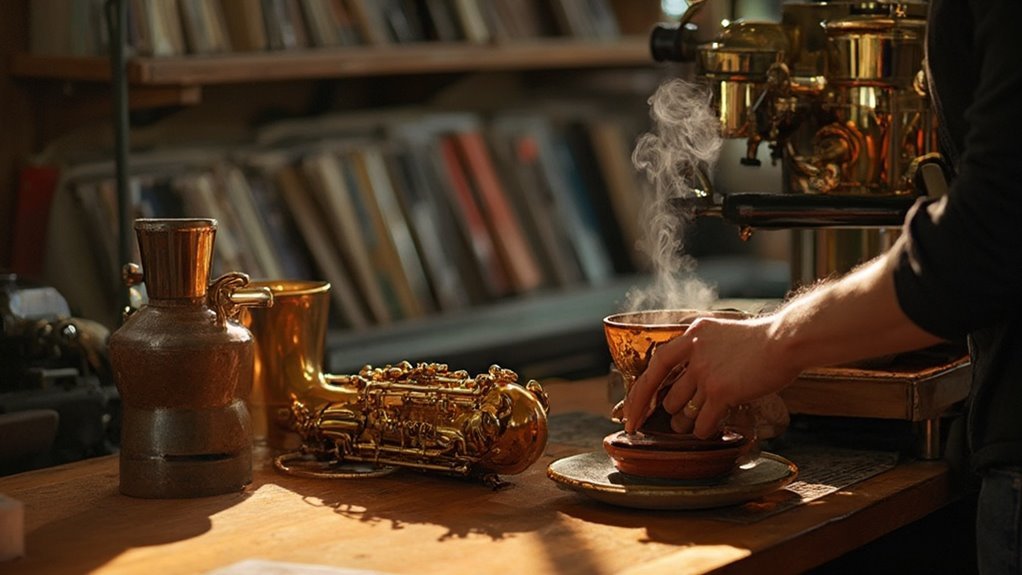
Three major shifts have transformed how we experience jazz in modern coffee houses. First, I've noticed that coffee shop acoustics have evolved from the basic setups of the past to carefully engineered spaces where sound travels with intention.
Second, the rise of digital streaming has allowed baristas to curate sophisticated jazz playlists that flow seamlessly through their shifts.
The third shift is perhaps the most exciting: the return of live jazz to coffee venues. I'm seeing more shops hosting weekly jazz nights where espresso fueled improvisation meets artisanal coffee culture. These spaces are becoming creative hubs where musicians can experiment while customers experience both craft coffee and innovative sounds.
What's particularly interesting is how modern coffee culture has embraced jazz's improvisational spirit. Just as a skilled barista adjusts their technique for the perfect pour-over, today's coffee house musicians adapt their performance to the space and audience. This synthesis creates an atmosphere where both coffee and music are elevated beyond mere consumption to become genuine artistic experiences. The result is a new coffee house jazz scene that honors tradition while embracing contemporary innovation.


