The Physics of Perfect Coffee BrewingMorning Light: How to Design Your Space for Dawn

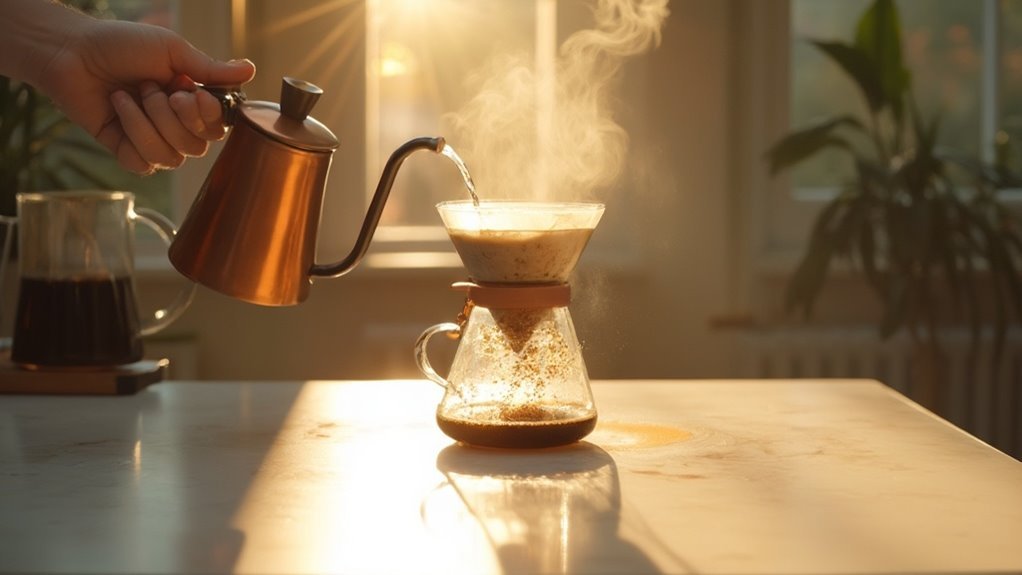
I've found that brewing perfect coffee is a dance of science and sunlight. By positioning your coffee station near east-facing windows, you'll harness dawn's natural light while maintaining optimal brewing temperatures between 195-205°F. I recommend arranging your equipment in preparation zones 18-24 inches apart, with your grinder closest to the water source. You'll want to monitor extraction times carefully – 2.5-3 minutes for pour-over, 4 minutes for immersion methods – while letting filtered water (150-200 ppm) work its magic. The intersection of physics and morning light holds the key to elevating your coffee ritual.
Understanding Heat Transfer Fundamentals
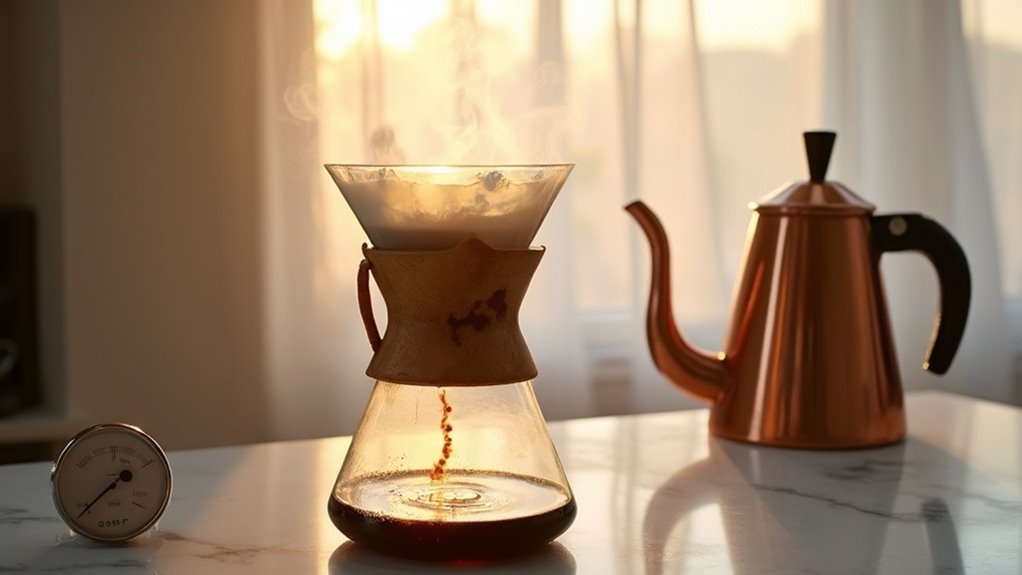
Coffee's relationship with heat transfer lies at the heart of the brewing process. When I brew coffee, I'm actually conducting a complex thermal energy management experiment. The interaction between water and coffee grounds depends on precise temperature control, which determines how compounds are extracted from the beans.
I've found that understanding radiative heat flux is crucial for maintaining optimal brewing temperatures. As water moves through coffee grounds, it loses heat through conduction, convection, and radiation. These heat transfer mechanisms affect extraction rates differently – too hot, and I'll over-extract bitter compounds; too cool, and I'll miss the sweet spot for soluble flavors.
To achieve consistent results, I monitor the temperature gradient from water to grounds. The initial heat shock when water hits the coffee creates a rapid extraction phase, followed by a more controlled release of compounds. I've learned to manipulate these variables by adjusting my pour rate and water temperature. By mastering these heat transfer principles, I can consistently extract the desired flavor compounds while avoiding the pitfalls of improper thermal management.
Natural Light and Spatial Flow
Beyond the thermal dynamics of brewing, the layout of a coffee preparation space shapes the entire experience. I've found that positioning your coffee station near east-facing windows maximizes natural dawn light, creating an optimal environment for morning rituals. The interplay between sunlight and shadows can transform your brewing space into a canvas for personal expression.
I recommend arranging your equipment to follow the natural flow of your preparation sequence. This means placing your grinder, kettle, and brewing apparatus in a left-to-right or circular arrangement that mirrors your movements. The ambient acoustics of your space matter too – hard surfaces can amplify the pleasant sounds of grinding and pouring, while softer materials help absorb unwanted noise.
Consider how light interacts with your surfaces throughout the morning. Glossy countertops can create harsh glare, while matte finishes diffuse light more evenly. I suggest using adjustable blinds or translucent curtains to fine-tune the intensity of incoming light, ensuring optimal visibility for measuring and pouring while maintaining a comfortable atmosphere for your coffee ritual.
Water Chemistry Behind Extraction
How does water chemistry influence the intricate dance of coffee extraction? I've found that understanding the molecular interplay between water and coffee grounds transforms an ordinary brew into an extraordinary sensory experience.
I start with TDS optimization – ensuring my water's Total Dissolved Solids hit that sweet spot between 150-200 ppm. Too few minerals and you'll get flat, under-extracted coffee; too many and you'll muddy the delicate flavor compounds. I've implemented advanced water filtration techniques to remove chlorine and excessive minerals while maintaining the essential calcium and magnesium that act as extraction catalysts.
The temperature directly affects solubility – I maintain 195-205°F (90-96°C) to extract the perfect balance of compounds. At this range, water molecules become highly energetic, efficiently pulling out desirable flavors while leaving behind harsh bitter notes. Through careful pH monitoring, typically aiming for 7.0, I ensure optimal conditions for extracting those prized flavor compounds. The science is clear: water isn't just a carrier – it's an active participant in creating the perfect cup.
Brewing Equipment Placement
Proper placement of brewing equipment creates a measurable impact on extraction uniformity and temperature stability. When I design counter layouts for coffee brewing, I prioritize three key zones: preparation, brewing, and serving. I've found that maintaining 18-24 inches between each zone optimizes workflow and prevents temperature loss during transfers.
I recommend positioning your grinder closest to your water source, with your scale and brewing device stationed directly adjacent. This arrangement minimizes the travel distance of ground coffee, reducing the risk of static buildup and ensuring consistent dosing. For pour-over setups, I calculate a minimum height of 12 inches between the kettle spout and filter bed to achieve optimal water dispersion.
Your workflow optimization should account for your dominant hand – I place frequently used tools like timers and filters on that side. Temperature stability benefits from positioning equipment away from windows and heat-generating appliances. I've measured up to 4°F temperature variations when brewing devices are placed near these thermal interference sources, which can significantly impact extraction consistency.
Time and Temperature Relationships
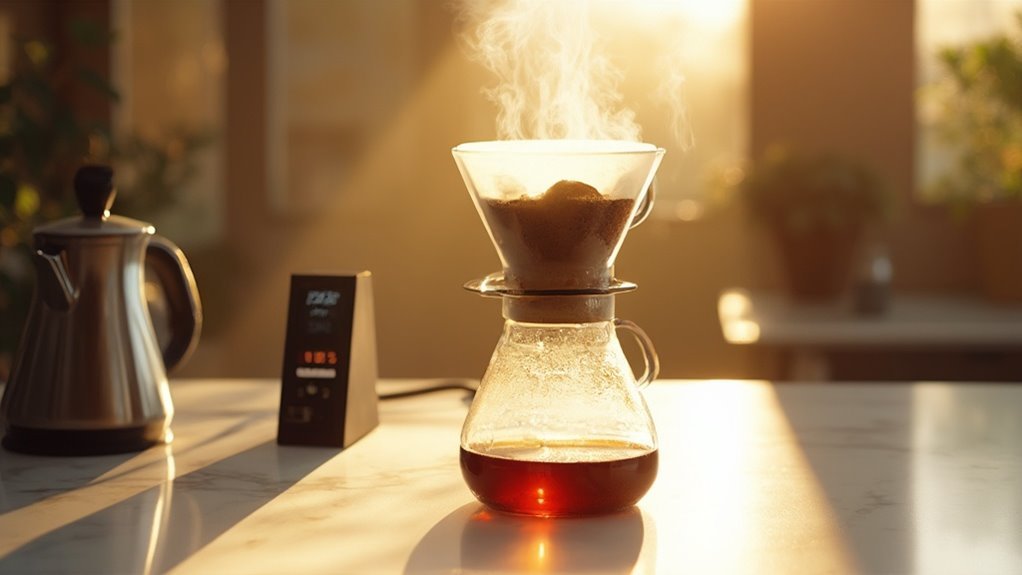
With brewing equipment properly positioned, understanding the interplay between time and temperature becomes our next focus. I've found that the key to exceptional coffee lies in mastering thermal regulation throughout the brewing process. Water temperature control isn't just about hitting the ideal 195-205°F range – it's about maintaining that temperature as water interacts with your grounds.
I recommend tracking your brew times precisely, as every second impacts extraction. For pour-over methods, I aim for a total brew time of 2.5-3 minutes, adjusting grind size to hit this window while maintaining optimal temperature.
When I use an immersion brewer like a French press, I extend contact time to 4 minutes but monitor temperature decay more carefully.
You'll want to consider your ambient room temperature too, as it affects how quickly your brewing water cools. I've discovered that preheating your brewing vessel can help maintain thermal stability. By using a digital thermometer and timer simultaneously, you'll be able to map the relationship between time and temperature, leading to consistently better extractions. This precise control is what elevates a good cup to an exceptional one.
Environmental Design for Coffee Stations
Creating an optimal coffee station environment requires careful consideration of several key factors. I've found that strategic placement of equipment and thoughtful spatial design can dramatically improve both workflow and coffee quality.
By implementing ambient noise reduction through sound-dampening materials and maintaining distance from high-traffic areas, I ensure a focused brewing environment that allows for precise measurement and timing.
I recommend designing your station with ergonomic counter layout principles in mind. Position your grinder, scale, and brewing equipment at optimal heights to reduce strain and maintain consistency in your movements. I suggest keeping frequently used items within arm's reach and arranging them in order of use, from left to right or right to left, depending on your dominant hand.
Your workspace should include task lighting that illuminates without creating glare or shadows, particularly important during early morning brewing sessions. I've discovered that maintaining a clean air environment, away from strong odors and with proper ventilation, helps preserve coffee freshness and allows for better sensory evaluation of your brews.


