Morning Garden Meditation: Growing Your Own Peace

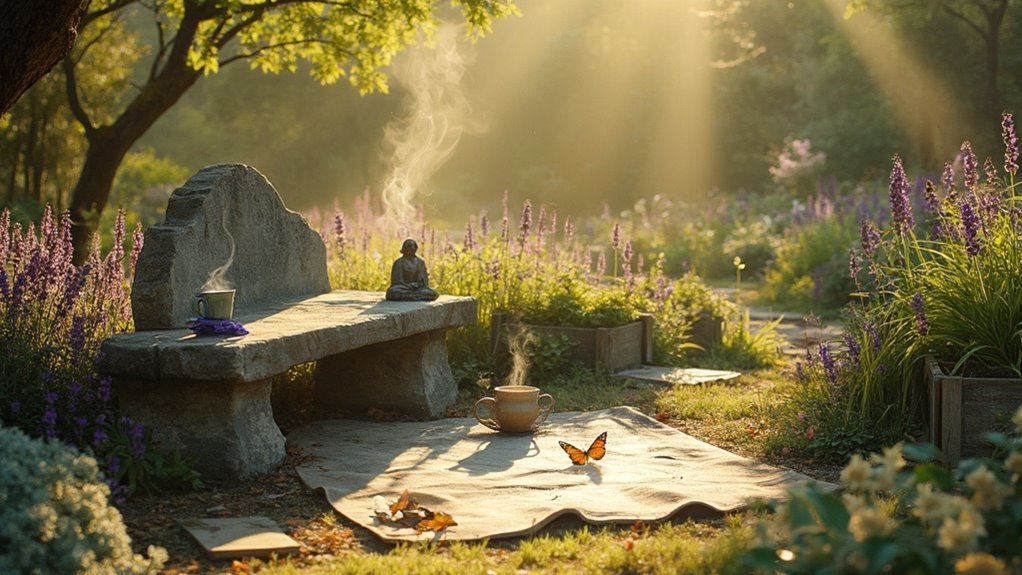
I've discovered that morning garden meditation can transform your daily wellness routine by combining mindfulness with nature immersion. When you create a dedicated sanctuary space with comfortable seating, aromatic plants, and soothing elements like water features, you'll activate multiple senses while deepening your practice. Through simple exercises like focused walking, breath work, and seasonal observation, you can reduce stress by up to 68% while improving focus and creativity. I adapt my practice throughout the year, from winter's dormant contemplation to summer's vibrant awakening. Let's explore how you can grow your own peaceful morning ritual.
Why Garden Meditation Works

Connecting with nature through garden meditation creates a powerful mind-body experience that can transform your mornings. When I immerse myself in my garden's living ecosystem, I tap into an ancient practice of cultivating introspection while engaging with the earth's natural rhythms. This combination activates multiple senses simultaneously, deepening my mindfulness practice beyond what I can achieve indoors.
By harnessing nature's energy in the garden, I've discovered that my brain responds differently to outdoor meditation. The gentle rustling of leaves, the subtle fragrance of soil and plants, and the early morning light create a multisensory environment that naturally calms my nervous system. Science backs this up – studies show that time spent in nature reduces stress hormones and blood pressure while improving focus and creativity.
I've found that garden meditation works because it combines two powerful wellness practices: mindfulness and earthing. When I ground myself among my plants, I'm not just observing nature – I'm participating in it. This active engagement helps me stay present and connected, making my meditation practice more sustainable and meaningful.
Creating Your Morning Garden Sanctuary
To harness these powerful benefits of garden meditation, I've learned that thoughtfully designing your outdoor space makes all the difference. Start by selecting a quiet corner where you'll feel undisturbed and protected. I recommend incorporating natural privacy screens like bamboo or climbing vines to create your personal sanctuary.
Next, focus on establishing a soothing ambiance through strategic plant placement. I've found that layering plants at different heights creates visual depth that draws your attention inward. Consider adding aromatic herbs like lavender or rosemary, which release calming scents when touched by morning dew.
Water features play a crucial role in crafting a calming atmosphere. Even a small tabletop fountain can provide the gentle sound of flowing water. I suggest placing comfortable seating that allows you to fully relax – perhaps a weatherproof meditation cushion or a cozy bench with soft pillows.
Essential Tools and Preparations
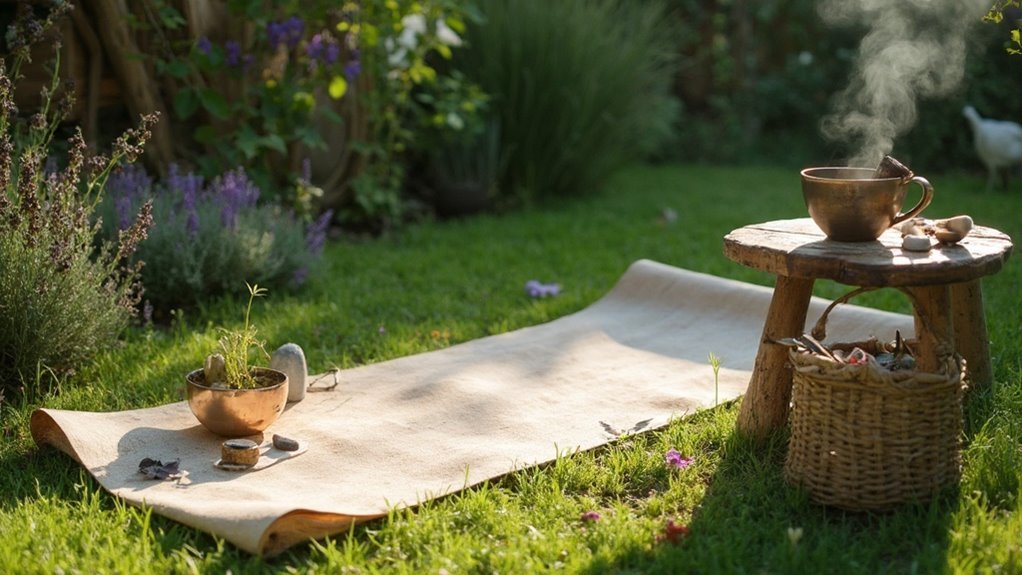
Before heading out into your morning garden sanctuary, gather a few essential items that will enhance your meditation practice. I recommend a comfortable cushion or portable garden seat, a timer with a gentle chime, and a small journal for reflection. Your meditation kit should also include basic garden tools – I keep mine in a dedicated basket by the door.
When choosing garden tools for mindful gardening, select items that feel natural in your hands. I've found that a hand trowel, pruning shears, and a weeding fork are perfect for quiet morning work. Keep them clean and organized to maintain the peaceful flow of your practice.
Consider organizing planting beds into meditation zones – areas where you can work quietly while maintaining awareness. I've designated specific sections for different morning activities: one for gentle weeding, another for pruning, and a separate space for planting. This approach helps me maintain focus and creates a natural progression through my meditation practice. Remember to position your tools and supplies strategically within these zones to minimize disruption to your mindful state.
Simple Mindfulness Garden Exercises
Start your garden meditation with gentle awareness exercises that ground you in the present moment. I recommend beginning with a slow walk through your garden space, deliberately placing each foot and feeling the texture of the ground beneath you. As you walk, practice focusing attention on your breath while observing the morning light filtering through leaves and petals.
Next, I'll guide you through calming techniques that engage your senses. Stop at a fragrant herb or flower, close your eyes, and take three deep breaths. Notice how the scent changes with each inhale. Move on to touch experiences – run your fingers along rough tree bark, smooth stones, or delicate flower petals. Listen intently to morning birdsong, rustling leaves, or the subtle sounds of growing plants.
For deeper connection, try the "rooting" exercise: stand barefoot on soil, imagining your feet growing roots into the earth. Feel the garden's energy rising through your body while practicing mindful breathing. This combination of grounding and focusing attention creates a powerful morning meditation practice that transforms your garden into a sanctuary of peace.
Seasonal Garden Meditation Tips
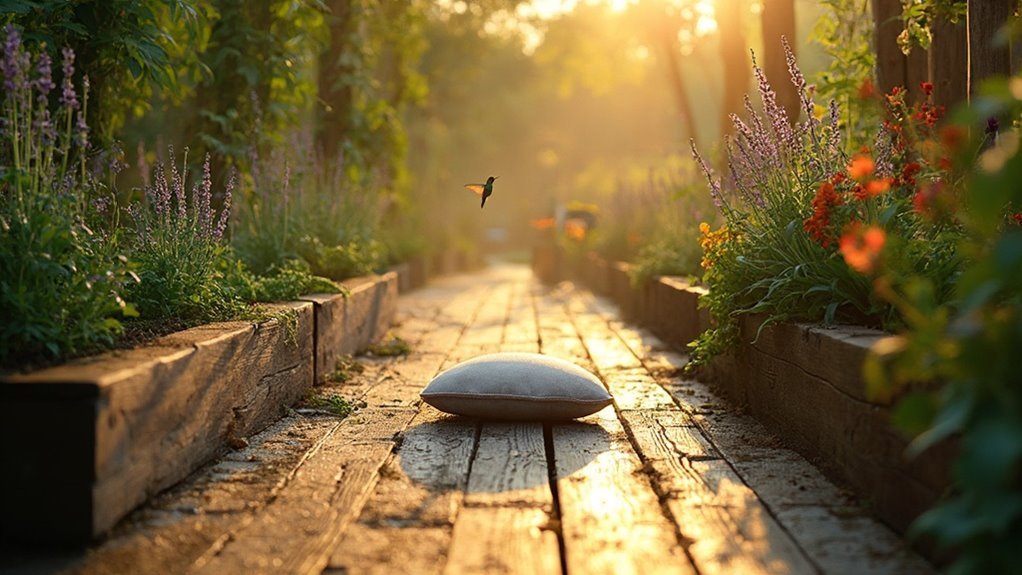
Adapting your garden meditation practice through the seasons enriches your mindfulness journey with nature's changing rhythms. I've found that each season offers unique opportunities to deepen your connection with your garden space.
In winter, I recommend focusing on the subtle movements of dormant plants and practicing stillness meditation while garden planning for spring.
As spring emerges, direct your awareness to new growth and awakening life. I suggest incorporating walking meditation along your garden paths, pausing to observe sprouting seeds and unfurling leaves.
Summer invites early morning sessions when the air is cool and fresh, perfect for practicing breath work among blooming flowers and buzzing pollinators.
Fall's seasonal transitions call for mindful observation of change – watching leaves turn color and plants prepare for dormancy. I've discovered that sitting meditation works particularly well during this time, as the cooling temperatures and shifting light create a naturally contemplative atmosphere.
Throughout the year, I encourage you to adjust your meditation timing and focus to align with nature's cycles, allowing your practice to flow organically with the garden's rhythms.